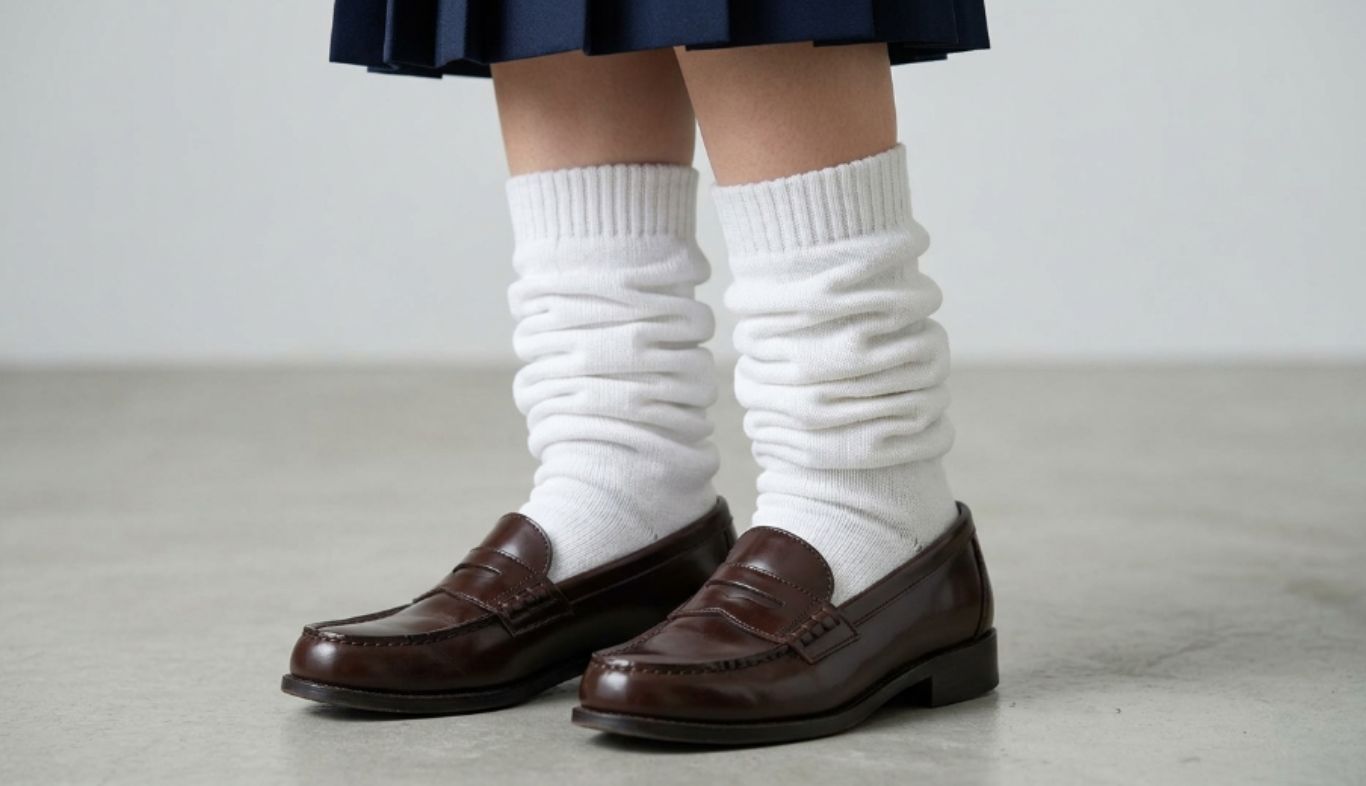
Few fashion accessories have such a strong connection to a particular youth culture as kogyaru socks. Often called loose socks or rūzu sokkusu (ルーズソックス), these oversized, deliberately bunched socks became one of the defining visual details of Japanese youth fashion during the 1990s. Unlike ordinary knee-high socks, loose socks were designed to create volume. Instead of staying neatly pulled up, they were gathered and pushed downward, producing a soft, scrunched appearance around the lower leg. White was especially common, although other colors also appeared. The style wasn’t simply about wearing a bigger sock. It was about changing the silhouette of a school uniform and making a standardized outfit feel personal. Japan’s official Web Japan archive described the trend in 1997, noting that schoolgirls had relatively little freedom to modify uniforms, making baggy socks one way to add individual style. That’s an important point. Kogyaru socks became meaningful because they transformed an everyday garment into a statement of identity.
The trend reached enormous popularity in the mid-to-late 1990s. Contemporary accounts associate the period with shortened skirts, loose socks, dyed hair, bold makeup, and other forms of fashion experimentation. Academic and cultural sources also connect the style with broader debates about youth independence, femininity, consumer culture, and school rules. Today, the look continues to influence Japanese-inspired streetwear, cosplay, photography, alternative fashion, and social-media styling. Modern versions don’t necessarily reproduce the original outfit exactly. Instead, designers and enthusiasts often borrow one element—the oversized sock—and combine it with contemporary clothing. In other words, kogyaru socks have moved beyond their original setting. They’re now recognized as a distinctive fashion reference with a fascinating cultural history.
What Are Kogyaru Socks?
Kogyaru socks are oversized, loose-fitting socks traditionally associated with the kogyaru or kogal fashion movement in Japan. Their defining feature is their exaggerated volume. A conventional knee sock is normally pulled smooth against the leg. A loose sock is intentionally allowed to bunch, fold, and collapse around the calf or ankle. The result resembles a soft leg warmer, although the sock still covers the foot.
Typical characteristics include:
- Extra-long construction
- Wide shafts
- White or light-colored fabric
- Ribbed or textured knitting
- Elastic sections designed to support bunching
- A deliberately slouchy silhouette
- Enough material to create multiple folds
Some traditional versions were exceptionally long. Historical descriptions and specialist fashion references report lengths that could reach around two meters, although modern versions are often shorter and easier to style. The oversized construction serves an aesthetic purpose. The sock isn’t supposed to look accidental or poorly fitted. Its folds are part of the design.
This distinction matters because simply wearing ordinary socks loosely won’t necessarily produce the same appearance. The volume needs to be substantial enough to form consistent layers.
The History of Kogyaru Socks
The Rise of Loose Socks in the 1990s
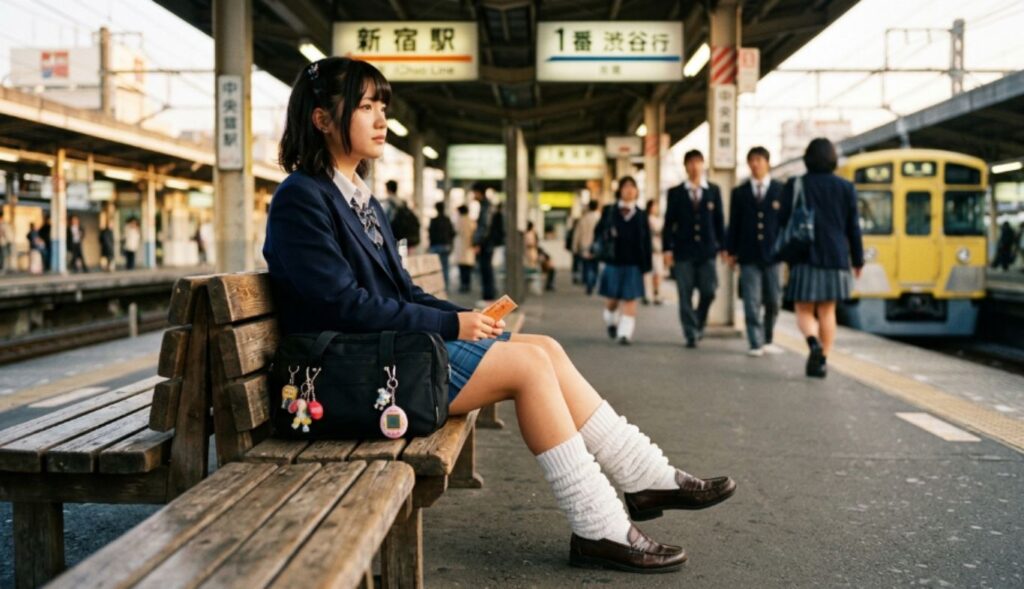
The history of kogyaru socks is closely tied to the development of kogyaru culture during the early and mid-1990s. Japanese school uniforms were relatively standardized, so students interested in fashion had limited opportunities to customize their everyday appearance. Accessories, hairstyles, makeup, bags, shoes, and socks therefore became especially significant.
Loose socks offered an easy visual transformation. A standard uniform could remain largely unchanged while the socks dramatically altered the proportions of the outfit. Web Japan’s historical fashion archive records the popularity of baggy white socks among Japanese junior- and senior-high-school girls during the 1990s. By the middle of the decade, the style had become strongly associated with kogyaru.
From Practical Item to Fashion Symbol
There are several explanations for why loose socks became popular. Some accounts emphasize practicality and warmth. Others focus on their ability to alter the appearance of the legs. Still others interpret the socks as a form of resistance to strict uniform expectations.
The most useful interpretation is that several factors worked together. Fashion is rarely caused by one thing. A garment can be comfortable, flattering, fashionable, rebellious, and socially meaningful at the same time.
The visual effect was also important. The large volume of the sock created contrast with the short skirt and streamlined school shoes associated with the style. That contrast made the legs and footwear visually prominent.
By the late 1990s, loose socks had become so recognizable that some schools introduced restrictions against them. Their popularity eventually declined as fashion changed and uniform regulations became stricter.
The Influence of Popular Culture
The wider kogyaru aesthetic was amplified by Japanese magazines, television, music, shopping districts, and celebrities. Namie Amuro is frequently discussed in accounts of the era because her tanned appearance, long hair, short skirts, and platform footwear helped popularize a broader gyaru aesthetic. At the same time, Shibuya became an important cultural center for youth fashion.
The result was a feedback loop:
- Young people developed distinctive styles.
- Street fashion attracted media attention.
- Magazines and television spread the look.
- Retailers responded with suitable products.
- More young people adopted the trend.
- The trend became a recognizable subculture.
Kogyaru socks were perfectly suited to this cycle because they were visually distinctive and relatively easy to reproduce.
Why Kogyaru Socks Became So Iconic
A Simple Garment With a Strong Silhouette
Fashion historians often pay attention to silhouette because it can make an outfit immediately recognizable. Kogyaru fashion had several strong visual contrasts:
| Element | Typical Visual Effect |
|---|---|
| Short pleated skirt | Creates a youthful, structured silhouette |
| Loose socks | Adds volume around the lower leg |
| Fitted shirt | Balances the oversized socks |
| Cardigan | Adds softness and layering |
| Loafers | Grounds the outfit |
| Bold accessories | Adds individual personality |
The sock is especially interesting because it changes the lower half of the outfit without requiring complicated tailoring. That’s why kogyaru socks became more than ordinary hosiery. They functioned almost like a design component.
Personal Expression Within a Uniform
A uniform communicates belonging. Fashion communicates individuality. Kogyaru styling brought those two ideas into tension. Students could wear essentially the same uniform while making choices about skirt length, socks, hair, makeup, accessories, and footwear. Academic discussions of gyaru culture frequently interpret these choices as forms of self-expression and challenges to conventional expectations.
This doesn’t mean every wearer had the same motivation. That’s an important distinction. It would be inaccurate to assume that everyone who wore loose socks was trying to make a political statement. Many simply liked the look. Nevertheless, the widespread popularity of the style shows how a small fashion modification can become culturally significant.
How to Style Kogyaru Socks
Start With the Socks
If you’re recreating the classic aesthetic, the socks should be the visual centerpiece. Choose a pair with enough length and material to create several folds. Pull them up first, then gradually push and gather the fabric downward. Don’t compress every fold equally.
A natural-looking arrangement usually has:
- Larger folds around the calf
- Some irregularity
- A relatively full upper section
- Enough material around the ankle
- A visible transition between the sock and shoe
The goal is controlled looseness.
Choose the Right Skirt
A pleated skirt is one of the most recognizable companions to kogyaru socks. Classic kogyaru styling often used shortened uniform skirts, although modern interpretations don’t need to reproduce that element. A contemporary version can use a regular pleated skirt, skort, or even shorts.
The key is proportion. Because the socks add volume to the lower leg, a very bulky top can make the entire outfit look heavy. A more fitted or moderately oversized top often creates better balance.
Add a Cardigan or Knit Layer
Oversized knitwear is another useful styling option. A cardigan creates a softer contrast with the structured pleats of a skirt. It can also make the look more wearable for everyday fashion rather than appearing like a costume.
Popular color combinations include:
- White socks + navy cardigan
- White socks + gray sweater
- White socks + beige cardigan
- Black socks + monochrome outfit
- Cream socks + brown accessories
The exact colors aren’t as important as the proportions.
Shoes That Work With Kogyaru Socks
Loafers
Classic school-style loafers are perhaps the easiest choice. Their relatively compact shape contrasts with the oversized socks, producing the visual balance associated with the original aesthetic. A black leather or faux-leather loafer works especially well with white socks.
Platform Shoes
Platform footwear can create a more dramatic interpretation. The extra sole height emphasizes the chunky quality of the socks and connects the look with broader 1990s gyaru fashion.
However, there’s a fine line between dramatic and overloaded. If the shoes are extremely large and the socks are extremely bulky, the lower half of the outfit can become visually crowded.
Sneakers
Modern streetwear often pairs oversized socks with chunky sneakers. This is one of the easiest ways to update the aesthetic without reproducing a historical school uniform. Contemporary fashion coverage has noted the continuing influence of loose socks in streetwear outside Japan.
For a casual outfit, try:
- White loose socks
- Chunky white sneakers
- Pleated skirt or shorts
- Oversized sweatshirt
- Small shoulder bag
The result feels inspired by kogyaru fashion rather than like a direct historical replica.
Choosing the Right Kogyaru Socks
Length
Length is probably the most important factor. Short socks won’t produce enough material for the classic bunched effect. Extremely long socks can work beautifully but may require more adjustment.
For everyday wear, look for a product described as:
- Loose socks
- Slouch socks
- Kogyaru socks
- Japanese loose socks
- Extra-long slouch socks
Product measurements are more useful than labels alone.
Width
A wide shaft is essential. If the shaft is narrow, the sock may cling to the leg instead of creating the characteristic folds. Look for stretch that allows the fabric to remain loose without falling immediately.
Fabric
Different materials create different effects.
| Material | Advantages | Considerations |
|---|---|---|
| Cotton | Breathable and comfortable | May lose shape over time |
| Acrylic | Lightweight and soft | Can feel warmer |
| Polyester blend | Durable and shape-retaining | Less breathable |
| Cotton blend | Good balance | Quality varies |
| Wool blend | Warm and textured | Usually too warm for hot weather |
For a warm climate, a lighter cotton blend may be more comfortable.
Color
White is the classic choice because it was strongly associated with the original look. However, black, gray, cream, navy, and pastel versions can work for contemporary styling. If you’re new to the aesthetic, white is the easiest starting point because it provides maximum contrast against dark shoes.
How to Create the Signature Scrunched Effect
Putting on kogyaru socks isn’t quite the same as putting on ordinary knee socks. Start by pulling the sock up toward the knee. Make sure the fabric is evenly distributed rather than twisted.
Then:
- Hold the upper section in place.
- Push excess material downward.
- Create several horizontal folds.
- Spread the folds around the leg.
- Check the shape from the front and side.
- Adjust the ankle area last.
Don’t make every fold perfectly symmetrical. A little variation usually looks more natural. If the sock keeps sliding, some specialized styling products have historically been used to hold loose socks in place. For modern styling, however, it’s better to prioritize comfortable, secure construction rather than relying heavily on adhesives.
Common Styling Mistakes
Even a great pair of kogyaru socks can look awkward if the proportions aren’t balanced.
Mistake 1: Not Enough Sock Volume
If there isn’t enough fabric, the socks may look like ordinary knee socks that have simply fallen down.
Mistake 2: Perfectly Flat Folds
The appeal comes from softness and volume. Overly precise folds can make the styling appear stiff.
Mistake 3: Too Many Oversized Elements
Huge shoes, a very oversized sweater, a large bag, and extremely bulky socks can compete for attention. Choose one or two statement elements.
Mistake 4: Ignoring Comfort
Fashion shouldn’t require constant adjustment. A sock that cuts into the calf, overheats the foot, or repeatedly falls down isn’t a successful everyday choice.
Mistake 5: Treating the Style as a Stereotype
Kogyaru was a real youth fashion culture with diverse participants and motivations. It shouldn’t be reduced to sensationalized assumptions about Japanese schoolgirls. Academic discussions have documented how media portrayals often linked kogyaru fashion with moral panic and controversial stereotypes. A thoughtful modern interpretation should focus on the fashion, creativity, and historical context.
Kogyaru Socks in Modern Fashion
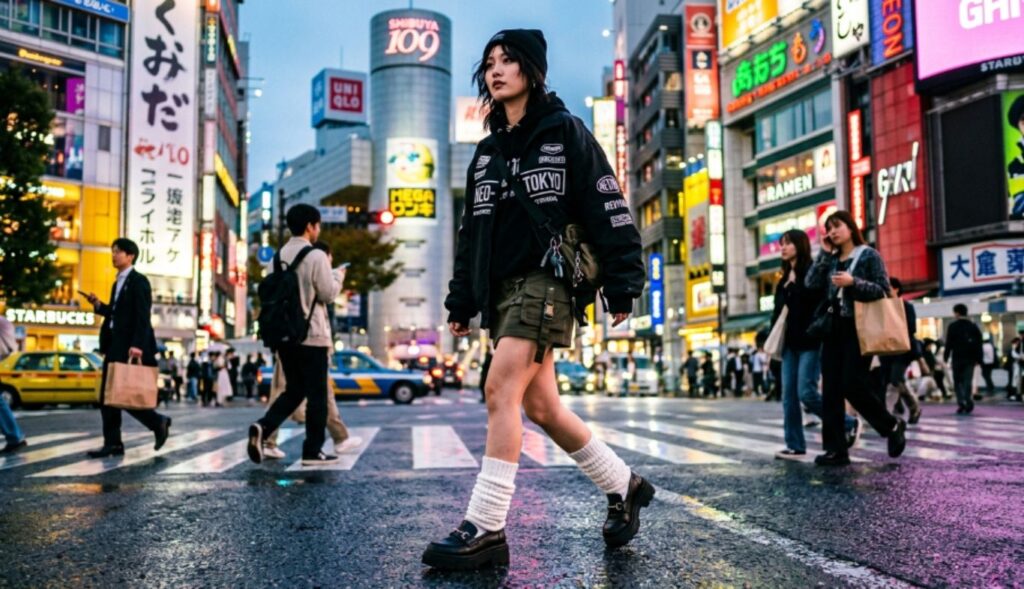
The return of kogyaru socks is part of a larger interest in 1990s and Y2K aesthetics. Fashion cycles often work this way. Items that once seemed dated can become interesting again when a new generation discovers them. Modern styling is usually less literal.
Instead of combining loose socks with every classic kogyaru element, people may pair them with:
- Denim skirts
- Oversized hoodies
- Pleated trousers
- Chunky sneakers
- Knit dresses
- Mini skirts
- Casual shorts
- Contemporary accessories
This makes the loose-sock silhouette more accessible. The trend also demonstrates how Japanese street fashion has influenced global youth fashion. Loose socks are no longer limited to one cultural setting, and variations of the style can be seen in alternative, kawaii, retro, and streetwear communities.
How to Wear the Style Respectfully
Fashion borrowing is common, but context matters. If you’re inspired by kogyaru socks, learning about their origins is a simple way to avoid turning the aesthetic into a shallow costume.
Remember these principles:
- Learn the history behind the look.
- Avoid reducing kogyaru culture to stereotypes.
- Don’t assume all gyaru styles are identical.
- Understand that kogyaru was primarily a youth fashion phenomenon of a particular era.
- Separate historical references from sexualized portrayals found in some media.
- Feel free to adapt the visual language to modern clothing.
A good fashion reference doesn’t require a perfect reproduction. In fact, the strongest modern interpretations often take one recognizable element and make it their own.
Where to Learn More About Japanese Youth Fashion
For a useful historical starting point, the Japanese government’s Web Japan archive has a period page documenting the popularity of baggy socks among Japanese schoolgirls in the 1990s.
For additional cultural context, academic work on gyaru and kogyaru is particularly useful because it moves beyond the visual stereotype and examines youth identity, fashion, media, and social expectations.
Kogyaru Socks vs. Ordinary Slouch Socks
Although the terms are sometimes used interchangeably today, there is a subtle difference in context. Slouch socks describe a broad category of socks that naturally bunch around the leg.
Kogyaru socks specifically evokes the Japanese youth-fashion tradition associated with loose socks and the kogyaru aesthetic. The construction can be similar, but the cultural reference is different.
| Feature | Kogyaru Socks | General Slouch Socks |
|---|---|---|
| Cultural association | 1990s Japanese kogyaru | Broad international fashion |
| Typical color | White | Many colors |
| Length | Often very long | Usually moderate |
| Volume | Very high | Low to high |
| Styling | Uniform-inspired or gyaru | Casual/streetwear |
| Historical significance | Strong | Limited |
| Modern use | Retro/Y2K/Japanese-inspired | Everyday fashion |
Understanding this distinction makes it easier to search for the right product and describe the aesthetic accurately.
Frequently Asked Questions
1. What are kogyaru socks?
Kogyaru socks are oversized, loose-fitting socks associated with Japan’s kogyaru or kogal youth fashion culture, especially during the 1990s. They’re usually worn deliberately bunched around the lower leg rather than pulled smooth.
2. Why did kogyaru girls wear loose socks?
There wasn’t one universal reason. Loose socks provided warmth, changed the visual proportions of the legs, and gave students a way to customize standardized uniforms. Historical sources also connect them with the broader rebellious and expressive character of kogyaru fashion.
3. Are kogyaru socks still fashionable?
Yes, although they’re not worn today in exactly the same way as during their 1990s peak. Loose socks have experienced renewed interest through Y2K, retro, Japanese-inspired, and streetwear fashion.
4. What color are traditional kogyaru socks?
White is the most recognizable traditional color. Black, navy, gray, and other colors can also be used, particularly in modern interpretations.
5. How long should kogyaru socks be?
Classic versions can be extremely long, providing enough fabric to create substantial folds. Modern wearers can choose shorter versions for convenience. The best length depends on the desired amount of volume and the wearer’s proportions.
6. How do you keep kogyaru socks from falling down?
Start with socks that have suitable elastic and a wide shaft. Some historical styling practices used specialized sock adhesive, but comfort and secure construction should come first.
7. Can you wear kogyaru socks with sneakers?
Absolutely. Chunky sneakers are a practical modern alternative to traditional loafers or platform footwear. The combination gives the look a more contemporary streetwear character.
8. Are kogyaru socks the same as leg warmers?
Not exactly. Leg warmers usually don’t cover the foot, while loose socks are still socks. Visually, however, extremely bunched loose socks can resemble leg warmers.
9. Can adults wear kogyaru socks?
Yes. The fashion item itself isn’t restricted to one age group. Adults can incorporate the loose-sock silhouette into casual, retro, Y2K, or Japanese-inspired outfits.
10. Are kogyaru socks comfortable?
They can be, especially when made from breathable, flexible materials. Comfort depends on the fabric, elastic, shoe combination, temperature, and fit.
11. Why were loose socks controversial?
Their popularity challenged conventional school-uniform expectations. Some schools restricted or banned them, while media coverage sometimes treated kogyaru fashion as evidence of broader social problems. Modern readers should distinguish those historical debates from the simple act of wearing a fashion accessory.
12. How can I create a kogyaru-inspired look without copying the entire historical outfit?
Use one or two recognizable elements. For example, combine white loose socks with a pleated skirt and modern sneakers, or wear them with a casual oversized sweatshirt. This keeps the inspiration visible while creating a contemporary outfit.
Final Thoughts
Kogyaru socks are a great example of how a seemingly ordinary fashion item can become a cultural symbol. Their story is about more than oversized hosiery. During the 1990s, loose socks became part of a broader youth movement that challenged standardized ideas about school uniforms, appearance, and personal expression. Their distinctive shape made them instantly recognizable, while their cultural context gave them meaning beyond their practical function. Today, the style has found a second life through retro fashion, Y2K trends, Japanese streetwear, cosplay, and social media.
The smartest way to wear the look is to understand where it came from and then adapt it thoughtfully. Whether you prefer the classic white version, a modern pastel interpretation, or a chunky sneaker combination, the essential idea remains the same: use proportion, texture, and volume to turn a simple sock into a statement. That’s the enduring appeal of kogyaru socks. They’re playful, recognizable, surprisingly versatile, and closely connected to one of Japan’s most influential youth-fashion movements.