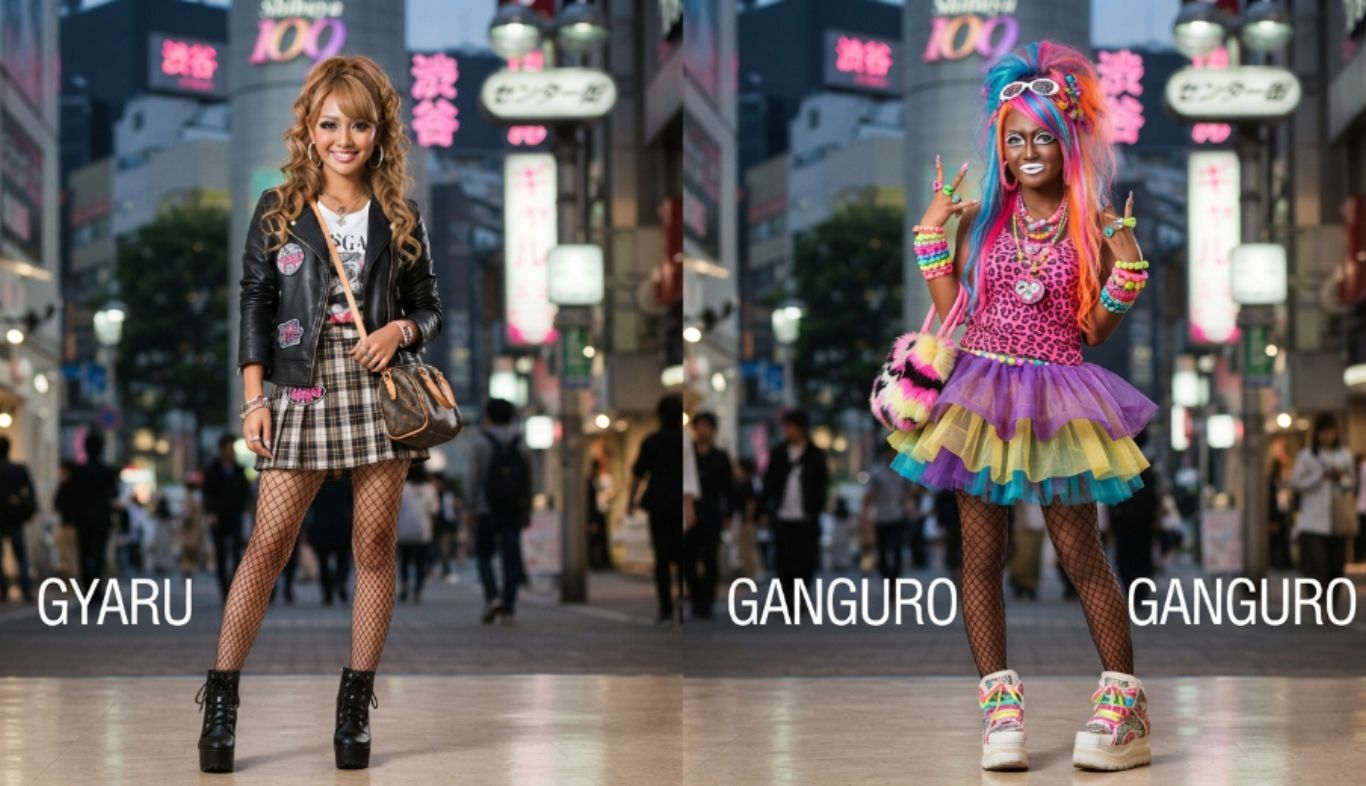
If you’ve ever searched for gyaru vs ganguro, you’ve probably noticed that the two terms are often used interchangeably. That’s understandable. Both are strongly connected with Japanese youth culture, dramatic makeup, dyed hair, statement clothing, and the famous street-fashion scene associated with Tokyo. However, gyaru and ganguro aren’t exactly the same thing.
The easiest way to understand the relationship is to think of gyaru as a broad fashion and cultural category, while ganguro is a particularly recognizable style within the wider gyaru world. Ganguro became especially famous for its very dark artificial tan, light or bleached hair, strong eye makeup, and high-contrast facial styling. The distinction matters because Japanese street fashion has never been completely static. Trends developed, split into substyles, disappeared, returned, and influenced one another. Contemporary descriptions can therefore make historical styles look much more rigid than they really were.
The Japan Times has documented gyaru as a major Shibuya youth style associated with dyed hair, short skirts, bright colors, elaborate accessories, and multiple subcultures. Ganguro, meanwhile, became particularly associated with deep tanning and dramatic contrast between skin, hair, and makeup during the 1990s. So, when comparing gyaru vs ganguro, the biggest lesson is simple: ganguro can be gyaru, but gyaru doesn’t have to be ganguro.
Gyaru and Ganguro at a Glance
Before diving into the history, here’s the quick version.
The table shows why gyaru vs ganguro shouldn’t be framed as two completely unrelated movements. They’re better understood as overlapping parts of Japanese street-fashion history.
The Origins of Gyaru
What Does Gyaru Mean?
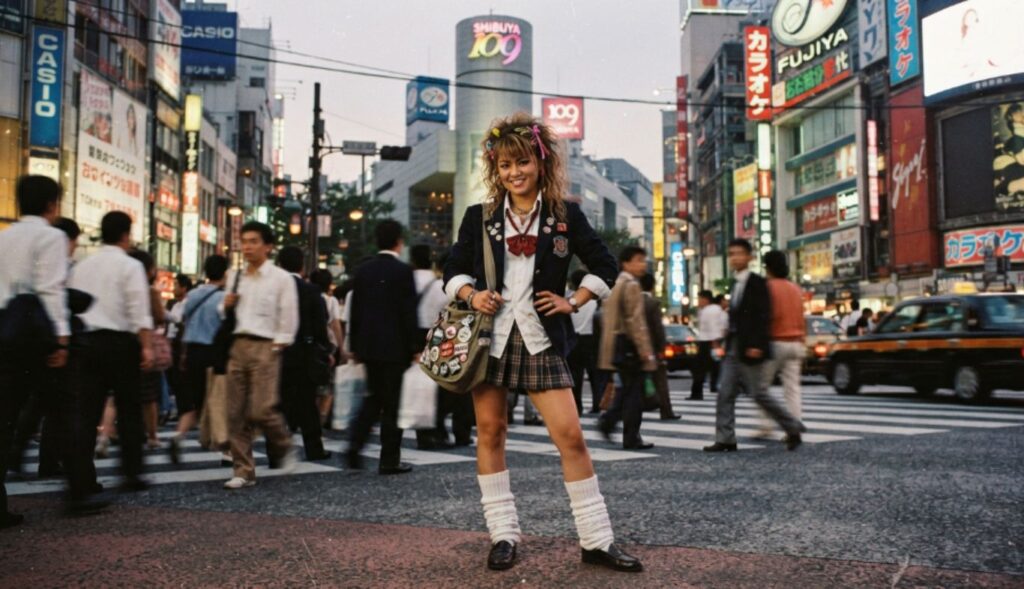
The word gyaru is commonly understood as a Japanese rendering of the English word “gal.” Over time, however, it developed a much more specific cultural meaning in Japan. Gyaru became associated with young women who embraced conspicuous fashion, beauty experimentation, and a confident departure from more conservative expectations of feminine appearance.
The look wasn’t one fixed uniform. Instead, it could include different combinations of:
- Dyed or highlighted hair
- Dramatic eye makeup
- False eyelashes
- Decorative nails
- Short skirts
- Platform shoes
- Loose socks
- Bright accessories
- Tanned skin
- Elaborate hairstyles
- Trend-focused clothing
This flexibility is one reason the term gyaru is broader than ganguro.
Why Shibuya Became Important
Shibuya played an enormous role in the development and visibility of gyaru culture. Tokyo’s youth districts provided places where fashion-conscious teenagers and young adults could gather, shop, socialize, and display new looks. The Japan Times describes Shibuya as a major center of youth culture and notes that gyaru became especially visible there, including around shopping areas and purikura, or Japanese photo-sticker booths.
That environment encouraged fashion to spread socially rather than simply from designers to consumers. In fact, reporting on Japan’s Heisei era describes a broader shift in which street fashion increasingly influenced designers, reversing the traditional flow from fashion professionals toward ordinary consumers.
That’s an important part of understanding gyaru vs ganguro. These styles weren’t created in isolation. They emerged from a lively street-fashion ecosystem where young people experimented with appearance and influenced one another.
Gyaru Was More Than Clothing
Another common mistake is to treat gyaru as nothing more than a makeup trend.
The culture also involved:
- Social identity
- Friend groups
- Music and entertainment
- Shopping habits
- Beauty routines
- Magazines
- Models and influencers of their era
- Youth independence
- Deliberate rejection of conventional appearance
For many followers, dressing gyaru wasn’t simply about looking attractive. It was a way to decide what attractiveness meant for themselves. That helps explain why the movement produced so many substyles.
The Rise of Ganguro
What Made Ganguro Different?
Ganguro emerged as a particularly striking expression of gyaru culture during the 1990s. The name is generally connected with the idea of a very dark or “black” face, reflecting the defining visual feature: extreme artificial tanning.
The classic ganguro appearance often combined:
- Deeply tanned skin
- Bleached or light-colored hair
- Pale or white lipstick
- Strong eye makeup
- False eyelashes
- Bright clothing
- Platform footwear
- Highly visible accessories
The result was deliberately high contrast. Historical reporting from The Japan Times describes ganguro as a mid-to-late-1990s phenomenon characterized by very dark artificial tans, bleached hair, whitened lips, and dramatic false eyelashes.
Why Was Ganguro So Noticeable?
Part of ganguro’s impact came from its willingness to exaggerate. Instead of aiming for a subtle beauty look, the style pushed visual features to extremes. Dark skin became darker. Hair became lighter. Eye makeup became more dramatic. Lips could become unusually pale.
In other words, ganguro wasn’t trying to disappear into the crowd. It was a fashion statement. This helps explain why gyaru vs ganguro comparisons often focus so heavily on tanning. The tan wasn’t merely one accessory among many. In classic ganguro, it was one of the defining elements of the entire aesthetic.
A Rebellious Image
Ganguro also became associated with a form of youth rebellion. That doesn’t mean every person who dressed ganguro had the same beliefs or motivations. Fashion communities are rarely that simple. Still, the style challenged established ideas about what a conventionally attractive Japanese woman “should” look like.
Instead of emphasizing pale skin and restrained makeup, ganguro celebrated a deliberately artificial, exaggerated appearance. This made the style highly visible—and controversial.
Ganguro’s Decline
Ganguro’s strongest period was relatively short-lived. By the early 2000s, the extreme look had become much less common. A 2003 Japan Times report described the dramatic decline of ganguro visibility in Shibuya and connected the change partly with growing awareness of the health risks associated with tanning.
A later Japan Times account similarly described ganguro as a style that had largely disappeared around 2000, although its visual influence remained part of the broader history of Japanese youth fashion. This is another reason to be precise when discussing gyaru vs ganguro: gyaru continued to evolve even as classic ganguro faded.
Fashion Differences Between Gyaru and Ganguro
Gyaru Fashion Is the Larger Umbrella
Gyaru fashion has never had one mandatory outfit. Depending on the period and substyle, a gyaru-inspired outfit might feature a fitted top, short skirt, loose socks, platform shoes, flashy accessories, denim, dresses, or highly coordinated seasonal pieces.
The overall goal is often polished, glamorous, youthful, and noticeable. Historical descriptions of gyaru mention bright colors, short skirts, loose socks, decorative details, and even unusual costume elements among different subgroups.
Ganguro Fashion Is More Visually Extreme
Ganguro fashion tends to be remembered for its strong visual contrast. The clothing could be colorful or revealing, but the most recognizable combination was the relationship between:
dark skin + light hair + pale makeup + dramatic eyes. That contrast made ganguro instantly recognizable in photographs and magazines.
Accessories Matter
Both styles can use accessories heavily.
Examples include:
- Large earrings
- Decorative hair accessories
- Statement bags
- Platform shoes
- Oversized sunglasses
- Elaborate nails
- Jewelry
- Colorful belts
Still, accessory choices can vary considerably depending on the era and substyle. Therefore, if you’re trying to distinguish gyaru vs ganguro, don’t rely on a single item of clothing. Look at the complete styling.
Makeup Differences
The Gyaru Makeup Philosophy
Gyaru makeup generally emphasizes glamour and enlarged-looking eyes.
Common techniques include:
- Dark eyeliner
- False eyelashes
- Mascara
- Highlighting
- Contouring
- Glossy or colorful lips
- Enlarging the appearance of the eyes
The exact execution has changed over time. Modern gyaru-inspired makeup can look softer than the heavily stylized versions associated with earlier decades.
Ganguro Makeup Uses Contrast
Classic ganguro makeup pushed contrast much further. The very dark tan created a dramatic background for pale lipstick, light eye areas, and strong black eyeliner. White or pale accents around the eyes and lips became particularly recognizable.
This wasn’t a random collection of beauty choices. The whole face was designed as one coordinated visual statement. That’s why gyaru vs ganguro is easiest to understand when you consider the overall effect rather than individual cosmetics.
Hair and Tanning
Hair in Gyaru Culture
Dyed hair has long been strongly associated with gyaru. Blonde, brown, highlighted, curled, teased, and voluminous styles have all appeared across different eras. However, not every gyaru has blonde hair, and hair color alone isn’t enough to identify the style.
The Ganguro Hair Contrast
Ganguro is much more closely associated with bleached or very light hair. The contrast between extremely tanned skin and light hair became one of the style’s visual signatures. This is probably the quickest clue for newcomers trying to understand gyaru vs ganguro.
Tanning Is the Major Clue
If you’re looking at a historical photograph and see very deep tanning combined with bleached hair and extremely pale makeup, there’s a strong chance you’re looking at ganguro or a closely related style. If the person has gyaru makeup and fashion but a lighter or more moderate complexion, it may be another form of gyaru.
Cultural Meaning and Identity
Fashion as Self-Expression
Both gyaru and ganguro demonstrate how clothing can become a form of identity. Rather than simply following conventional beauty rules, participants could construct their own visual language.
That could communicate:
- Confidence
- Independence
- Friendship
- Youthfulness
- Glamour
- Rebellion
- Creativity
- Social belonging
It’s important, though, not to assume every wearer had identical motivations.
Why Exaggeration Matters
Exaggerated fashion can serve a social purpose. When a style is extremely recognizable, people who share it can identify one another quickly. A dramatic hairstyle or makeup technique can become a visual signal that says, “This is my scene.” Ganguro took that idea to an especially visible level.
A Broader History of Japanese Youth Fashion
Japan has a long history of youth cultures using clothing to express changing social values. Earlier and later movements have included many different approaches to appearance and identity. The wider history of Japanese fashion also shows that clothing continually changes through interactions between tradition, technology, commerce, and outside influences. The Metropolitan Museum of Art, for example, describes Japanese clothing history as a dialogue between traditional practices, modern inventions, and Western ideas. That broader context makes the story of gyaru vs ganguro even more interesting.
The Role of Shibuya
Shibuya wasn’t just a backdrop. It became a physical meeting point for young people interested in fashion, music, shopping, entertainment, and social life. Gyaru were particularly associated with Shibuya during their most visible period, and magazines and photographers helped turn street looks into widely recognized fashion trends.
This created a feedback loop: street style → magazines → wider popularity → new variations → street experimentation.
Ganguro benefited from this same ecosystem. The visual intensity of the style made it particularly attractive to photographers and media outlets documenting Tokyo’s youth scene. If you’re researching gyaru vs ganguro, understanding Shibuya is essential because the neighborhood helped turn localized fashion experiments into nationally and internationally recognized images of Japanese youth culture.
Major Gyaru Substyles
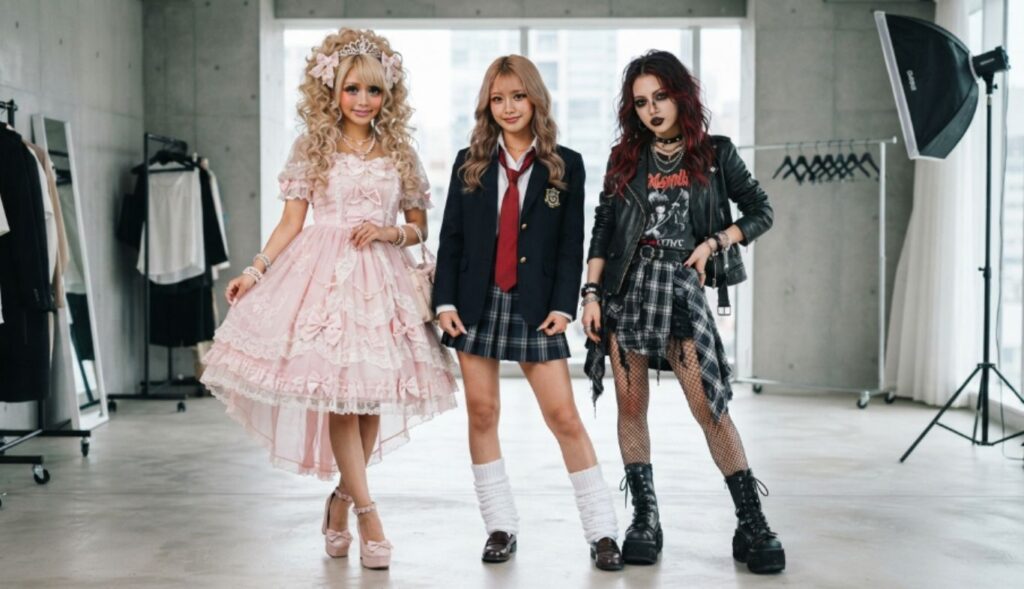
One reason the comparison can become confusing is that gyaru itself contains numerous substyles.
Ganguro
The classic heavily tanned look is the best-known historical example.
Manba
Manba pushed some of the dramatic visual elements even further, particularly strong makeup and light accents around the eyes.
Yamanba
Yamanba is often associated with an even more exaggerated version of the extreme gyaru aesthetic.
Hime Gyaru
Hime gyaru, meaning “princess gyaru,” takes a more romantic and ornate direction, with elaborate hair, feminine clothing, and decorative styling.
Onee Gyaru
Onee gyaru generally presents a more mature, sophisticated version of gyaru fashion.
Agejo
Agejo became associated with glamorous, feminine styling and dramatic beauty influenced by nightlife fashion. These categories demonstrate why gyaru vs ganguro is not really an equal comparison. One term describes a broad family, while the other identifies a particular historical branch within that family.
Gyaru vs Ganguro: Direct Comparison
| Category | Gyaru | Ganguro |
|---|---|---|
| Scope | Broad subculture/style family | Specific historical style |
| Skin | Can be light, medium, or tanned | Usually extremely tanned |
| Hair | Many colors and styles | Often bleached/light |
| Makeup | Glamorous and dramatic | Highly contrasting and exaggerated |
| Clothing | Many substyles | Often flashy and youthful |
| Era | Evolved across decades | Most strongly associated with the 1990s |
| Identity | Broad fashion community | Distinctive visual subculture |
| Current relevance | Continues in newer forms | Primarily historical/influential |
The simplest formula is: Gyaru = the larger category. Ganguro = one famous, highly distinctive branch.
That single distinction clears up most confusion.
Common Misconceptions
Misconception 1: All Gyaru Are Ganguro
False. Gyaru includes many styles that don’t use the extremely dark tan associated with classic ganguro.
Misconception 2: Ganguro and Gyaru Are Completely Separate
Also false. Ganguro developed within the broader gyaru-related street-fashion environment.
Misconception 3: Gyaru Is Only About Makeup
Not quite. Fashion, hair, accessories, social identity, magazines, music, shopping, and community all contributed to the culture.
Misconception 4: Ganguro Was Just a Beauty Trend
That’s too simplistic. Ganguro was also part of a wider youth culture and represented an intentionally unconventional approach to beauty.
Misconception 5: The Styles Have Never Changed
Definitely not. Japanese street fashion evolves rapidly. Styles merge, split, disappear, and return with new interpretations.
Modern Influence
Although classic ganguro is no longer the dominant street style it once was, its visual legacy hasn’t vanished.
Modern fashion communities can revisit older Japanese subcultures through:
- Social media
- Vintage magazines
- Archival photography
- Fashion blogs
- Cosplay
- Music videos
- Designer collections
- Online beauty tutorials
Gyaru itself has also experienced periods of revival and reinterpretation. Today’s versions may borrow the oversized eyes, dramatic lashes, elaborate hair, platform footwear, or glamorous styling of earlier generations without reproducing the entire historical look.
This is common in fashion. Yesterday’s extreme trend can become tomorrow’s reference point. The influence of Japanese street fashion has also traveled internationally. What began in particular Tokyo neighborhoods became material for global fashion enthusiasts, photographers, stylists, and online communities.
How to Recognize Each Style
If you’re looking at a photo and need a quick identification method, use these five questions.
1. Is the skin extremely tanned?
If yes, ganguro becomes more likely.
2. Is the hair very light or bleached?
If combined with an intense tan, that’s another strong ganguro clue.
3. Is the makeup extremely high contrast?
Pale lips and dramatic eye makeup strongly suggest classic ganguro.
4. Does the overall look appear glamorous but less extreme?
That may point toward another gyaru style.
5. Is the look clearly connected to a particular substyle?
If so, identify the substyle before simply calling it ganguro. The goal isn’t to put every outfit into a rigid box. Fashion is messy, and that’s part of its charm. Instead, these clues help you understand the historical context behind a particular appearance.
Frequently Asked Questions
Is ganguro a type of gyaru?
Yes. Ganguro is generally understood as a distinctive style within the broader gyaru-related fashion culture. Its most recognizable features include very dark tanning, light hair, pale makeup accents, and dramatic eye styling.
What is the main difference between gyaru and ganguro?
The main difference is scope. Gyaru is the broader fashion and youth-culture category, while ganguro is a specific, highly distinctive style associated especially with the 1990s and extreme tanning.
Did all gyaru have dark tans?
No. Tanning varied widely among gyaru styles. Some substyles emphasized a tan, while others favored lighter skin or a more polished, mature appearance.
When was ganguro most popular?
Ganguro was particularly visible during the mid-to-late 1990s. Contemporary reporting describes it as a prominent Shibuya phenomenon during that period, followed by a substantial decline around the turn of the millennium.
Why did ganguro become popular?
There wasn’t one single reason. It emerged from a broader youth-fashion environment in which young people experimented with beauty, identity, and rebellion against conventional expectations. Its dramatic appearance also made it highly visible in media.
Is gyaru still popular today?
Gyaru has changed significantly over time, and its visibility has fluctuated. However, its aesthetic ideas continue to influence Japanese and international fashion communities, particularly through online culture and revivals of older styles.
Is manba the same as ganguro?
No. Manba is generally treated as another highly exaggerated branch or evolution within the broader gyaru family. The styles share visual characteristics but shouldn’t automatically be treated as identical.
Why is Shibuya important to gyaru history?
Shibuya became one of the major physical centers for Japanese youth fashion. Gyaru became strongly associated with the district, where young people could shop, socialize, take purikura photographs, and display new looks.
Are gyaru and ganguro Japanese cultural traditions?
They’re better described as modern Japanese youth subcultures and fashion movements rather than traditional cultural practices. They developed within contemporary urban Japan, particularly during the late 20th century.
Can someone wear a modern gyaru style without copying historical ganguro?
Absolutely. Modern gyaru-inspired fashion can borrow specific elements—such as dramatic lashes, styled hair, platform shoes, or glamorous clothing—without adopting the classic ganguro tan or makeup.
Conclusion
The easiest way to remember gyaru vs ganguro is this Gyaru is the broad fashion family, while ganguro is one of its most dramatic and historically recognizable branches. Gyaru developed into a diverse collection of Japanese youth styles involving fashion, beauty, hair, accessories, and self-expression. Ganguro took some of those ideas to an extreme, becoming famous for its deep tan, bleached hair, pale makeup, and intense visual contrast. Their history also shows why fashion shouldn’t be judged only by what looks unusual from the outside. These styles were part of a broader period of experimentation in Japanese street culture, particularly around Shibuya. They gave young people new ways to define beauty, community, confidence, and individuality.
So, next time you see an image from Japan’s famous 1990s street-fashion scene, don’t automatically label every bold look “ganguro.” Take a closer look at the skin tone, makeup, hair, clothing, and overall styling. Once you understand the relationship, gyaru vs ganguro becomes much easier to distinguish—and the fascinating history behind both styles becomes a lot clearer.