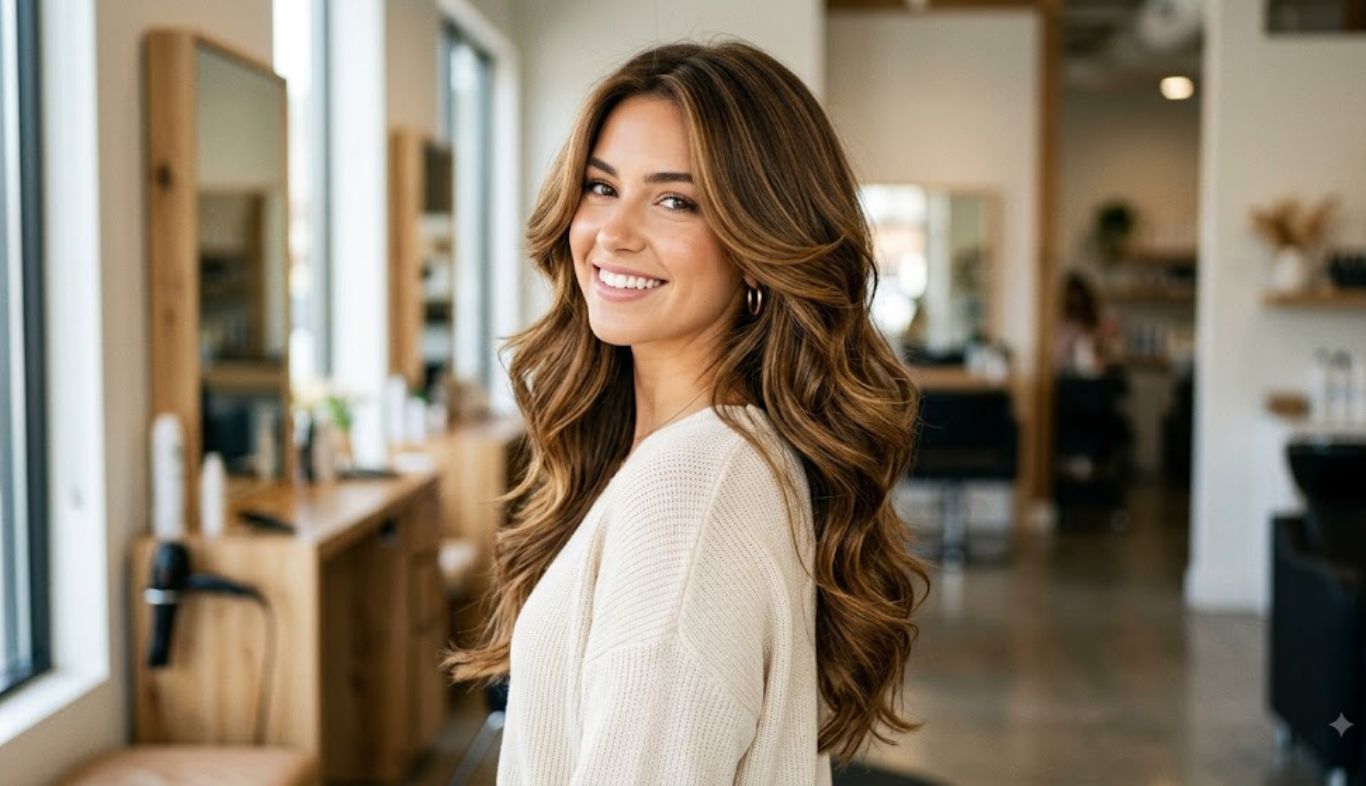
Layered hair with extensions is one of the easiest ways to create the appearance of fuller, longer, more dynamic hair without waiting months or years for natural growth. Extensions can add length, but layers are what give that extra hair shape. Instead of looking like one heavy curtain of hair, the finished style can have movement, softness, and dimension. The secret is balance. Extensions should support your haircut rather than overpower it. When the lengths, textures, and colors are blended properly, the result can look surprisingly natural. Layered styles also work across many hair types. Straight hair can gain volume and movement, wavy hair can look fuller and more defined, and curly hair can benefit from carefully matched extensions that preserve its natural pattern.
There’s another major advantage: versatility. A good layered extension style can be worn sleek for work, softly waved for a casual day, or curled for a wedding, party, or evening event. In other words, you’re not stuck with one look. However, extensions aren’t completely maintenance-free. The American Academy of Dermatology warns that repeated tension from extensions and other tight hairstyles can contribute to breakage and traction alopecia. Proper installation, regular breaks, and gentle handling are therefore essential.
The good news is that you don’t need complicated tricks to get a beautiful result. Start with the right extension type, create a sensible layering plan, and treat your natural hair gently.
Choosing the Right Extensions for Layered Hair
Before choosing a style, consider your natural hair’s length, density, texture, and condition. These four factors determine how easily extensions will blend.
Clip-In Extensions for Flexible Styling
Clip-ins are a popular choice because they can be removed whenever you want. They’re especially useful for occasional volume, events, photographs, or experimenting with a new hairstyle.
For layered hair, clip-ins can be placed at different sections of the head to create gradual fullness. A stylist can trim the extensions to follow your existing layers. They’re also convenient because you aren’t committed to wearing them every day.
Tape-In Extensions for a Seamless Finish
Tape-ins are thin and sit relatively flat against the head. They’re useful when you want a more continuous look and don’t want visible clips.
Because they remain attached for a period of time, proper installation and maintenance matter. If the extensions pull, feel painful, or cause scalp irritation, they should be adjusted or removed.
Sew-In and Weft Extensions
Sew-in or weft extensions can create substantial volume and length. They’re particularly useful for people who want a fuller hairstyle rather than just a few extra inches.
However, the weight and tension must be appropriate for the natural hair. More hair isn’t automatically better hair. If the extension is too heavy, it can place unnecessary stress on the roots.
Choosing the Correct Weight
Extension weight is often overlooked. Fine hair generally needs lighter extensions, while thick hair may support more density.
A useful rule is simple: the extension should enhance your hair, not dominate it. If your natural hair is delicate, discuss the safest option with a professional stylist before installation.
15 Stunning Layered Hair with Extensions Styles
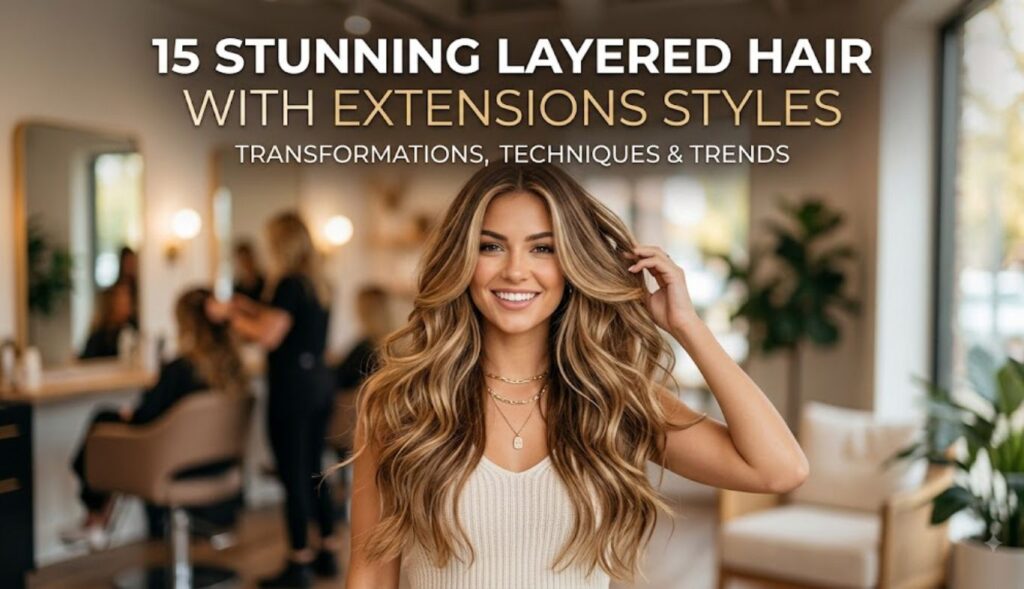
Once you have the right extension type, the fun part begins. Here are 15 styles worth considering.
1. Long Soft Layers
Long layers create gentle movement without dramatically reducing the overall length. Extensions can fill out the lower sections while maintaining a natural silhouette. This is a great choice if you want polished hair that still feels easygoing.
2. Face-Framing Layers
Face-framing layers begin around the cheekbones, jaw, or chin and gradually blend into longer lengths. They’re excellent for creating visual structure and can make a long hairstyle feel lighter.
3. Voluminous Butterfly Layers
Butterfly-inspired layers feature shorter pieces around the face and longer lengths toward the back. Extensions can make this style especially dramatic by increasing volume throughout the lower sections. For a glamorous finish, add loose waves and brush them gently afterward.
4. Layered Beach Waves
Beach waves and extensions are a natural pairing. The layers prevent long hair from appearing too heavy while waves emphasize the different lengths. Use moderate heat and a heat protectant when styling.
5. Sleek Layered Hair
Not every layered style has to be curly. Straight, glossy hair with subtle layers can look sophisticated and modern. The key is precision. Extensions should be cut so that the transition between natural hair and added hair isn’t obvious.
6. Long Shag with Extensions
A modern shag combines multiple layers with texture and movement. Extensions can add density where the style needs more fullness. This option works particularly well for people who enjoy a slightly undone, effortless appearance.
7. Layered Ponytail
A layered ponytail can look fuller and more polished when extensions add thickness. For a soft effect, leave a few face-framing pieces loose around the temples and cheeks.
8. Half-Up Layered Style
A half-up hairstyle highlights the layers around the face while keeping the remaining hair loose. This style works beautifully for parties, date nights, ceremonies, and photographs.
9. Layered Hollywood Waves
Large, smooth waves give extensions a glamorous finish. The layers help prevent the waves from looking too uniform. This is a particularly strong option for formal events.
10. Layered Bob with Extensions
Extensions aren’t only for extremely long hair. A shorter layered haircut can use extensions to add strategic volume or create a temporary longer look. This makes extensions useful for experimentation.
11. Curtain-Bang Layers
Curtain bangs transition into longer face-framing layers. Extensions can add fullness behind the bangs while maintaining the softer shape around the face.
12. Long Curly Layers
Curly hair benefits from carefully matched extension texture. The layers should follow the curl pattern instead of fighting it. A skilled stylist can help determine where extra density will look most natural.
13. Layered Side Part
A deep or soft side part can create extra volume on one side of the hairstyle. Extensions make that effect even more noticeable. This style is simple but packs plenty of visual impact.
14. Romantic Loose Curls
Loose curls create a soft, feminine finish. Layers allow the curls to separate naturally instead of forming one heavy mass. Add a lightweight finishing product to control frizz without making the hair stiff.
15. Dimensional Layered Balayage Look
A layered cut combined with highlights or balayage can create impressive dimension. Extensions can be color-matched to the lighter and darker sections for a seamless result. The important thing is to match the overall color pattern, not simply one strand.
How to Blend Extensions Into Your Layers
The most important part of layered hair with extensions is blending. Even high-quality extensions can look artificial if the transition isn’t handled correctly.
Match Length Before Cutting
Extensions should usually be longer than the finished haircut so there’s enough material to shape. A stylist can install them first and then cut them together with the natural hair.
Blend Density, Not Just Length
Suppose your natural hair is thin at the ends and your extensions are extremely thick. Even if both are the same length, the difference may be obvious. Removing some extension density can create a more natural transition.
Use Strategic Layers
Layers shouldn’t be identical all over the head. Instead, they should support the shape of your haircut. Face-framing sections may be shorter, while the back remains longer and fuller.
Avoid Excessive Thinning
Over-thinning can make the ends look wispy. That’s especially noticeable when extensions are involved. A stylist should remove enough weight for movement while preserving a healthy-looking perimeter.
How to Choose Layers for Your Face Shape
Face shape isn’t a strict rulebook, but it can provide useful styling direction.
Round Faces
Longer layers that begin below the cheek area can visually lengthen the face. Avoid creating too much width directly at the cheeks if your goal is a slimmer appearance.
Oval Faces
Oval faces are versatile and can generally handle many layered designs. Face-framing layers, curtain bangs, and long waves are all strong options.
Square Faces
Soft layers around the jaw can balance stronger facial angles. Loose waves can also add softness.
Heart-Shaped Faces
Layers that add fullness around the lower half of the face can help create visual balance. Ultimately, your personal preference matters more than a face-shape chart. A good stylist should consider your features, hair texture, lifestyle, and desired maintenance level together.
Styling and Maintaining Layered Hair with Extensions
Creating Natural Waves
Waves are one of the easiest ways to make layered hair with extensions look cohesive. Because the natural hair and extensions move together, differences in density become less noticeable.
Start with dry hair and apply an appropriate heat protectant. Divide the hair into manageable sections and use a curling or waving tool at a moderate temperature.
Don’t repeatedly apply high heat to the same section. The American Academy of Dermatology recommends limiting excessive heat because it can damage hair and contribute to brittleness. Once the hair cools, gently separate the waves with your fingers or a wide-tooth comb.
Soft Curls Versus Tight Curls
Soft curls generally create a more natural blend than very tight curls, especially if your natural hair is straight. If your extensions have a different texture from your natural hair, you may need to style both together to create consistency.
Creating Volume at the Crown
Extensions can add volume, but crown volume should be created carefully. Instead of aggressively teasing the hair, use lightweight styling products and gentle root lifting. Excessive teasing can create tangles and unnecessary breakage.
Caring for Your Extensions
Good maintenance makes a significant difference in how long extensions remain attractive.
Wash Gently
Use products appropriate for your extension type. Focus shampoo on the scalp and roots while allowing the lather to travel through the lengths.
Don’t scrub aggressively. Condition the lengths and ends, but follow the specific instructions for your extension method. Some attachment systems require you to avoid heavy oils or conditioners near the bonds.
Brush From the Ends Up
Start at the ends and gradually work toward the roots. Hold the hair above the attachment area while brushing so you’re not pulling directly on the extension points. A wide-tooth comb or extension-friendly brush can help reduce snagging.
Protect Hair While Sleeping
Sleeping with loose, tangled hair can create unnecessary friction. A loose braid or low ponytail can help control movement. A smooth pillowcase or hair wrap may also reduce friction. Avoid sleeping with wet hair whenever possible because wet hair is more vulnerable to breakage.
Keep the Scalp Comfortable
Your scalp shouldn’t constantly hurt because you’re wearing extensions. Pain, stinging, crusting, or a hairstyle that feels excessively tight can be warning signs that the style needs to be loosened or removed. The AAD specifically recommends changing a style if it causes pain or irritation.
How Often Should You Take a Break?
There isn’t one universal schedule for every extension method, hair type, and installation technique. However, giving natural hair periods without extensions can reduce repeated stress. The AAD advises switching up hairstyles and allowing hair to recover between extension or weave styles; its guidance also recommends limiting continuous extension wear rather than treating it as a permanent hairstyle.
Signs You Need a Break
Pay attention if you notice:
- Persistent scalp tenderness
- Increased breakage
- Thinning around the hairline
- Unusual shedding
- Redness or irritation
- Headaches after installation
- Extensions feeling heavier than usual
- Difficulty brushing without pulling
Don’t simply push through discomfort. A beautiful hairstyle isn’t worth damaging your natural hair.
Color Matching Layered Hair with Extensions
Color matching is another major part of creating convincing layered hair with extensions.
Match the Mid-Lengths and Ends
The root color isn’t always the most important factor. Extensions should blend with the visible lengths and ends. If your hair has highlights, lowlights, or balayage, a single solid extension color may not blend perfectly.
Consider Multi-Tonal Extensions
Multi-tonal extensions can mimic natural color variation. They may also make layered hair appear more dimensional. If you color your hair frequently, choose extensions with enough flexibility to accommodate future color changes.
Don’t Automatically Dye Extensions
Some extensions can be colored, while others may not respond well to chemical processing. If you’re unsure, ask a professional before applying bleach or permanent dye.
Professional Installation Versus DIY
DIY clip-ins can be convenient for occasional use. More permanent extension methods are different.
A professional stylist can assess:
- Hair density
- Scalp condition
- Extension weight
- Attachment placement
- Layer placement
- Color compatibility
- Overall haircut shape
That assessment matters because the best extension design depends on the individual. A professional can also spot potential problems before they become serious. If your natural hair is already breaking or thinning, adding extensions may not be appropriate until the underlying issue is addressed.
The AAD recommends consulting a board-certified dermatologist if you’re experiencing hair loss, since hair loss can have many causes beyond styling practices.
Common Mistakes to Avoid
Making Extensions Too Heavy
More volume sounds appealing, but excessive weight can create unnecessary tension.
Skipping the Blend
Simply attaching long extensions underneath a short haircut often creates an obvious shelf-like effect.
Ignoring Texture
Straight extensions on tightly curled hair may require constant styling to look consistent. Matching texture usually creates a more believable result.
Wearing Tight Styles Too Often
Repeated tension is one of the biggest concerns associated with extensions. The AAD notes that repeated pulling can contribute to traction alopecia, which can become permanent when follicles are damaged.
Forgetting the Natural Hair
Extensions aren’t a substitute for basic hair care. Your own hair still needs gentle washing, conditioning, and protection.
Building a Beautiful Extension Routine
A Simple Weekly Routine
A practical routine can keep layered hair with extensions looking polished without turning hair care into a full-time job.
| Task | Recommended Approach |
|---|---|
| Brushing | Start at the ends and work upward |
| Washing | Use gentle products suited to your extension type |
| Conditioning | Focus on mid-lengths and ends |
| Heat styling | Use heat protection and moderate temperatures |
| Sleeping | Keep hair controlled and avoid wet hair |
| Scalp care | Watch for pain, irritation, or buildup |
| Professional checks | Follow your stylist’s recommended schedule |
| Breaks | Give natural hair time without extensions |
Daily Care
Brush gently and avoid unnecessary manipulation. If your hair becomes tangled, don’t yank through the knot. Separate it carefully with your fingers first.
Wash-Day Care
Detangle before washing when appropriate for your extension type. Use lukewarm water rather than extremely hot water. After washing, squeeze out excess water instead of aggressively rubbing the hair with a towel.
Styling-Day Care
Heat protection is essential when using curling irons, straighteners, or hot brushes. Keep temperatures as low as practical for the result you’re trying to achieve.
Budgeting for Layered Hair with Extensions
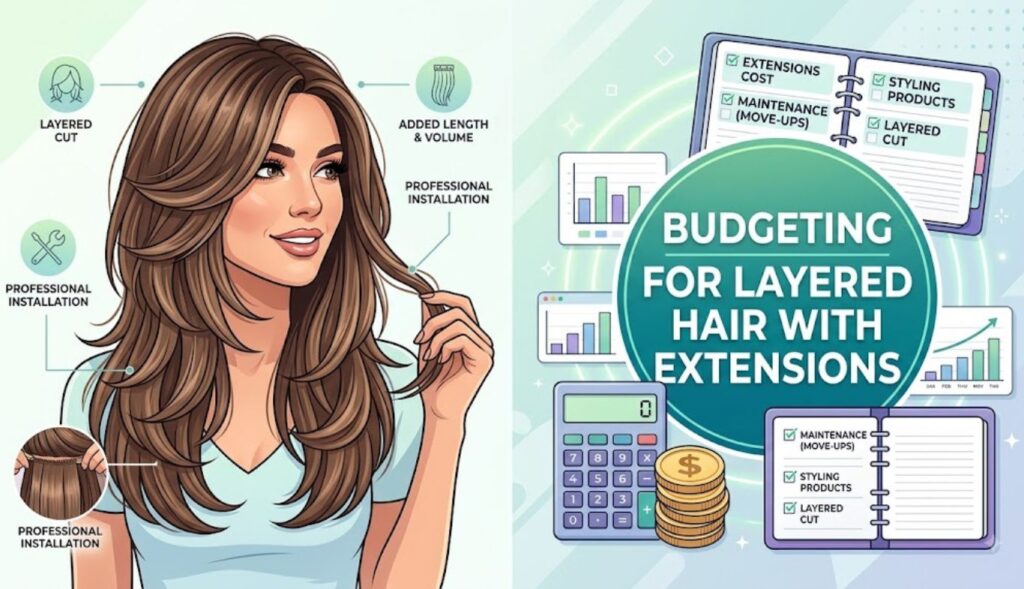
The cost of layered hair with extensions varies widely depending on the extension material, length, density, installation method, stylist experience, and maintenance schedule. Clip-ins usually have a different upfront cost structure than professionally installed extensions.
You should also budget for:
- Initial installation
- Cutting and blending
- Maintenance appointments
- Extension-safe products
- Removal or replacement
- Occasional professional styling
Don’t choose an extension method solely because it has the lowest initial price. Poor installation can create problems that cost more to correct later.
When to Remove Extensions
Extensions should be removed or adjusted if they cause persistent discomfort, significant tangling, or excessive tension. Don’t wait until you see obvious hair loss.
The AAD notes that hairstyles causing pain, stinging, or other scalp problems should be changed, and that early attention to traction-related hair loss is important.
What Healthy Extension Wear Should Feel Like
A well-installed style shouldn’t make you constantly aware of tension. You should be able to move your scalp comfortably, sleep reasonably well, and care for your hair without significant pulling.
If something doesn’t feel right, speak up. Your stylist can often make adjustments before a small issue becomes a bigger one.
Frequently Asked Questions
1. Can layered hair with extensions look natural?
Yes. The most natural results come from properly matched color, texture, density, and length. Professional blending is particularly important when the natural haircut is significantly shorter than the extensions.
2. Are extensions good for thin hair?
They can be, but caution is important. Fine or fragile hair may not tolerate heavy extensions well. Lightweight options can sometimes provide volume with less tension, but a professional should assess your hair before installation.
3. Can I curl layered hair with extensions?
Yes. Many extensions can be curled, provided the material and attachment method allow heat styling. Always use suitable heat protection and avoid excessive temperatures.
4. How do I stop extensions from looking fake?
Focus on blending. The extension color should match the visible hair, and the ends should be shaped with the natural layers. Adding gentle waves can also help different densities blend together.
5. Can extensions damage natural hair?
Yes, they can if they’re too tight, too heavy, poorly installed, or worn continuously without appropriate care. Repeated tension can cause breakage and traction alopecia.
6. How long should I keep extensions in?
It depends on the extension method and your stylist’s instructions. Don’t use a single timeline for every technique. If you experience pain, irritation, excessive tangling, or thinning, have the extensions assessed immediately.
7. Can I wear extensions every day?
Some people do, but daily wear requires careful maintenance and appropriate installation. Regularly changing hairstyles and giving your natural hair breaks can help reduce repeated stress.
8. Should I sleep with extensions?
This depends on the extension type. Removable clip-ins should generally be removed before sleeping. For attached extensions, follow the manufacturer’s and stylist’s care instructions and keep the hair controlled to reduce tangling.
9. Are extensions suitable for curly hair?
Yes, but texture matching is crucial. Extensions that closely resemble your natural curl pattern usually create a more seamless result than straight extensions that require constant heat styling.
10. Can I color my extensions?
Some extensions can be colored, but the answer depends on the material and original processing. Avoid experimenting with bleach or permanent color unless the extension manufacturer or a qualified stylist confirms it’s suitable.
Conclusion
Layered hair with extensions offers an impressive combination of length, volume, movement, and styling flexibility. From soft face-framing layers and beach waves to glamorous curls and dimensional color, there’s a layered look for almost every personal style. The most important lesson is that extensions should complement your natural hair rather than place unnecessary stress on it. Choose an appropriate weight, match the texture and color carefully, blend the layers professionally when possible, and maintain the hair gently.
Most of all, listen to your scalp and natural hair. Pain isn’t a normal part of a good hairstyle, and repeated tension can have lasting consequences. The American Academy of Dermatology recommends avoiding hairstyles that continuously pull on the hair and seeking professional medical advice when hair loss occurs. With the right technique and a sensible care routine, layered hair with extensions can be a versatile and polished way to transform your look while keeping your natural hair at the center of the routine.