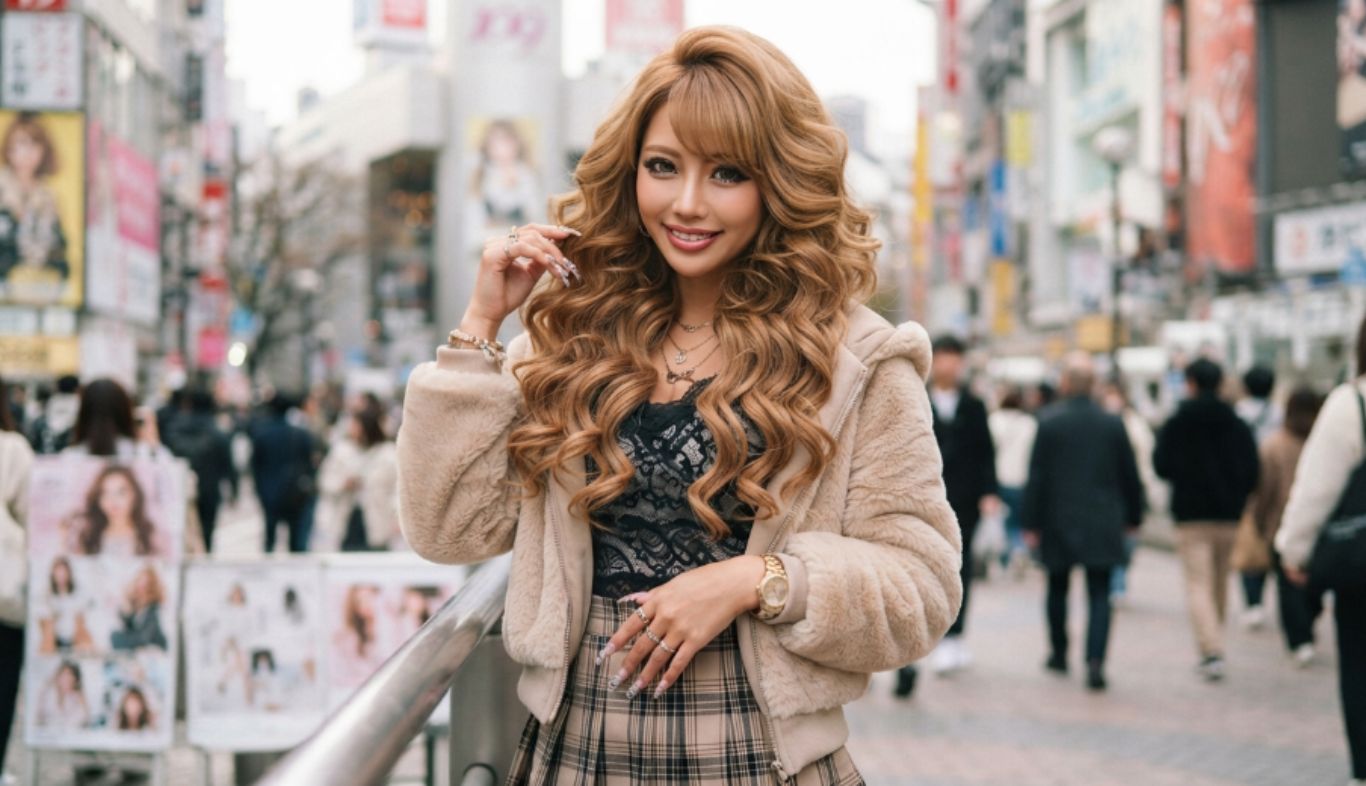
Classic Loose Gyaru Curls combine soft waves, generous volume, defined movement, and a distinctly feminine finish. Unlike tight ringlets, this hairstyle is designed to look touchable and flowing. The curls usually begin around the middle or lower sections of the hair, while the roots retain enough lift to create that signature glamorous silhouette.
The appeal is easy to understand. Classic Loose Gyaru Curls can make everyday hair look polished without feeling overly formal. They’re dramatic enough for a night out, yet relaxed enough for brunch, shopping, a casual date, or even a stylish workday.
The key is balance. You don’t want every strand curled into a perfect spiral. Instead, the finished hairstyle should have different curl directions, airy volume, soft ends, and a little movement. In other words, it should look intentionally styled but not stiff.
Gyaru-inspired hairstyles have evolved over time, so there isn’t just one correct version. Modern interpretations often borrow the recognizable volume and face-framing shape while using softer curls and more natural textures. That makes the look surprisingly versatile.
Another advantage is that the technique can be adapted to different hair lengths. Long hair can produce dramatic cascading waves, medium hair can create a bouncy salon-inspired finish, and shorter hair can use larger sections to achieve a compact version of the same aesthetic.
Before reaching for a curling iron, though, remember that the health of your hair matters. Frequent heat styling can contribute to dryness, brittleness, and breakage. The American Academy of Dermatology provides dermatologist-backed guidance on reducing hair damage while styling.
So, think of this guide as more than a curling tutorial. It’s a complete approach to creating a glamorous gyaru-inspired finish while keeping the process practical and hair-conscious.
What Makes Gyaru Curls Different?
The first thing to understand is that gyaru curls aren’t simply “big curls.” Their visual impact comes from several elements working together:
- Root volume
- Large, loose curls
- Face-framing pieces
- Defined but soft ends
- Layered movement
- Glossy texture
- Controlled flyaways
- A lifted overall shape
Traditional curling techniques often aim for uniformity. Gyaru styling does the opposite. The hairstyle looks better when the curls have subtle differences in size and direction.
For example, one section may curve toward the face while the next curves away from it. This prevents the hair from forming one solid curtain of curls.
Soft Volume Is the Secret
Volume is probably the most recognizable feature of the look. However, volume doesn’t mean teasing your hair until it’s stiff.
Instead, focus on creating lift at the crown and underneath the top layers. A round brush during blow-drying can help establish body before you even begin curling.
If your hair is naturally fine, avoid loading it with heavy oils or creams before styling. These can sometimes make delicate strands fall flat. A lightweight mousse or volumizing spray can be more useful.
Thicker hair, meanwhile, may need stronger sectioning and a product that helps the curls hold their shape.
Face-Framing Curls Matter
The sections around the face deserve special attention.
Rather than curling them into tight spirals, use a larger barrel or create a gentle bend. The front pieces should blend into the rest of the hairstyle instead of looking like separate corkscrews.
A common technique is to direct the front sections away from the face. This opens the appearance of the hairstyle and creates a sweeping effect around the cheeks and jawline.
That small detail can make a huge difference.
The Modern Interpretation
Modern gyaru-inspired hair doesn’t have to be extremely exaggerated. You can create a toned-down version with:
- Larger curls.
- Less teasing.
- Softer roots.
- Natural-looking shine.
- More relaxed ends.
This version works particularly well for everyday styling.
For special occasions, you can increase the volume and definition. Add statement accessories, stronger hold spray, or more pronounced face-framing pieces, and the hairstyle becomes instantly more dramatic.
Start With the Right Hair Condition
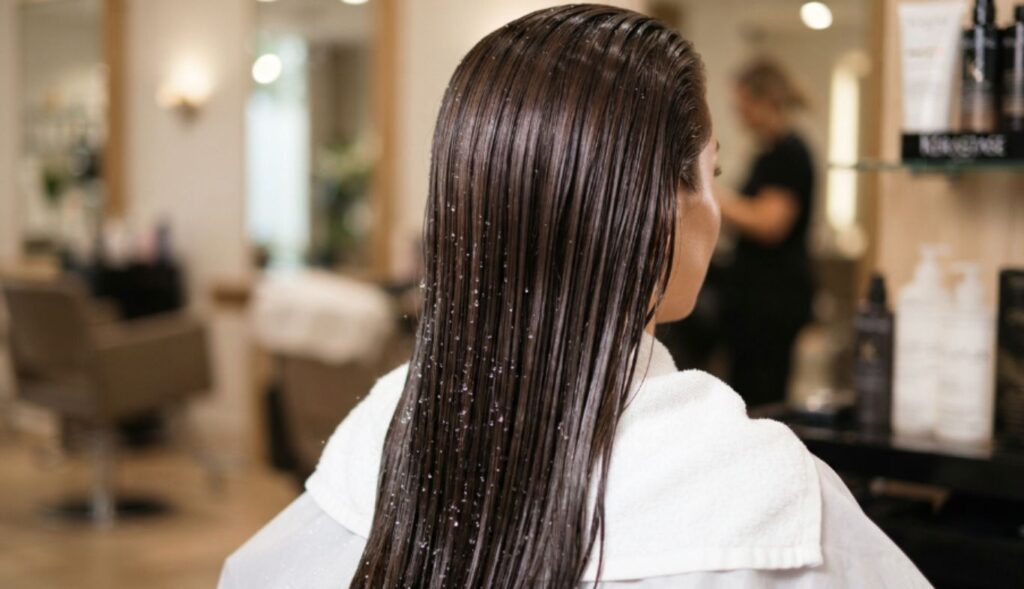
Great curls begin before the curling iron touches your hair.
If your hair is extremely dry, tangled, or coated with heavy product buildup, the finished result may look dull rather than glossy. Start with clean, manageable hair and use conditioner appropriate for your hair type.
You don’t necessarily need freshly washed hair every time, though. Many people find that second-day hair can actually hold curls well because it has slightly more texture.
The important point is to avoid styling hair that is soaking wet.
Detangle Without Rough Handling
Use a gentle approach when detangling.
Begin at the ends and gradually work upward. Pulling a brush aggressively from the roots down can create unnecessary tension, particularly when the hair is wet and more vulnerable to stretching.
A wide-tooth comb can work well for textured or curly hair, while a flexible detangling brush may suit straighter hair.
Apply Heat Protection
Heat protection should be a standard part of a frequent hot-tool routine.
Apply a heat-protective product according to its instructions, distributing it evenly rather than concentrating a large amount in one area.
Don’t assume that more product automatically means more protection. Too much can leave the hair damp, sticky, or weighed down.
If you’re unsure about your product’s instructions, follow the manufacturer’s guidance.
Dry the Hair Completely
This step is easy to overlook.
Before using a traditional curling iron or wand, make sure your hair is dry. Damp hair can react poorly to direct high heat.
For extra volume, blow-dry the roots upward or use a round brush to create lift. You can also dry the hair with your head tilted slightly forward if that helps create body.
Create a Clean Foundation
Divide the hair into manageable sections.
A simple structure is:
- Bottom section
- Middle section
- Upper section
- Crown
- Face-framing pieces
You don’t need salon-perfect sectioning. You simply need enough organization that you aren’t repeatedly curling the same strands.
Choosing a Curling Iron or Wand
For loose gyaru-inspired curls, a larger barrel generally creates a softer result than a very small barrel.
The ideal size depends on your hair length and the exact finish you want. Longer hair can accommodate a larger barrel, while shorter hair may require a more moderate size.
A curling wand can create a more relaxed shape, while a curling iron with a clamp can offer additional control.
A Round Brush
A round brush is useful for creating root volume before curling.
Choose the brush size according to your hair length. A larger brush generally produces a smoother, fuller blowout, while a smaller brush can create more control.
Sectioning Clips
Don’t underestimate simple clips.
They make the process faster because they prevent already-styled sections from getting mixed with unstyled hair.
Lightweight Styling Products
A useful gyaru styling kit might include:
| Product | Main Purpose |
|---|---|
| Heat protectant | Helps reduce heat-related styling stress |
| Volumizing mousse | Adds body and texture |
| Lightweight hairspray | Provides flexible hold |
| Shine spray | Adds polished-looking finish |
| Smoothing serum | Tames selected flyaways |
| Dry shampoo | Adds texture between washes |
You don’t need every product listed above. Start with the basics and add products only when you know what your hair actually needs.
A Wide-Tooth Comb or Soft Brush
Once the curls have cooled, you can gently separate them.
The goal isn’t to brush everything flat. Instead, loosen the curls enough to create soft waves while preserving their overall shape.
Step 1: Section the Hair
Begin by dividing your dry, prepared hair into sections.
Start from the bottom and work upward. Clip the upper hair out of the way.
Smaller sections create more definition, while larger sections produce softer waves. For classic loose gyaru curls, medium-sized sections are usually a good starting point.
Step 2: Establish Root Volume
Before curling, make sure the roots aren’t completely flat.
Use a round brush while blow-drying, or gently lift the roots with your brush and direct warm air toward them.
Don’t overdo this step. The goal is lift, not an enormous teased crown.
Step 3: Curl Away From the Face
Start with the lower sections.
Wrap each section around your curling tool and hold it according to the tool manufacturer’s recommended temperature and timing.
For the pieces nearest your face, generally curl away from the face. This creates the characteristic open, flattering frame.
Step 4: Alternate Curl Directions
As you move toward the back and sides, alternate directions.
For example:
- One section away from the face
- Next section toward the face
- Next section away again
This creates separation and prevents the curls from merging into one large wave.
Step 5: Leave the Ends Slightly Relaxed
One of the easiest ways to make curls look too formal is to curl every inch of the hair.
Instead, allow the ends to remain slightly softer when appropriate for your tool and technique.
This creates a more effortless finish and helps the hairstyle move naturally.
Step 6: Let the Curls Cool
This is the patience step.
Don’t immediately brush through freshly heated curls. Allow them to cool and settle first.
Cooling helps the styled shape become more stable. Once the hair has cooled, gently loosen the curls with your fingers or a soft brush.
Step 7: Finish With Soft Hold
Use a light mist of hairspray rather than soaking the hairstyle.
Lift individual sections and spray lightly if you need additional support.
Finally, arrange the face-framing pieces, smooth obvious flyaways, and check the silhouette from the front and sides.
That’s the whole process.
Seven simple stages can transform a basic blowout into a glamorous, loose gyaru-inspired hairstyle.
Lift the Crown Carefully
The crown is where many people either under-style or over-style.
If the crown is completely flat, the hairstyle can look heavy. If it’s aggressively teased, it can look dated or feel difficult to manage.
A better approach is gentle lift.
Take a small crown section, lift it upward, and lightly backcomb near the roots if your hair needs additional support. Smooth the top layer afterward.
Use Different Curl Sizes
Uniform curls can look artificial.
Instead, vary your section sizes slightly. Larger sections produce broad waves, while smaller sections create additional definition.
Combining both gives the hairstyle more depth.
Think in Layers
The bottom layer doesn’t need to look identical to the top layer.
In fact, allowing the lower sections to have slightly larger, softer bends can make the upper curls look fuller.
The result is a hairstyle with dimension rather than one solid mass.
Don’t Forget the Back
It’s easy to spend ten minutes perfecting the front and then completely ignore the back.
Use a handheld mirror or take a quick photo to check the rear silhouette.
The back should have visible movement and volume without becoming excessively wide.
Keep Shine Controlled
Gyaru-inspired hair often looks glossy, but excessive oil or serum can make curls collapse.
Apply shine products sparingly, concentrating on the mid-lengths and ends rather than the roots.
A little goes a long way.
Fine Hair
Fine hair can lose curl quickly.
Use lightweight products and avoid excessive conditioning immediately before styling if that makes your hair slippery.
Smaller sections can help create initial definition, which you can later loosen into larger waves.
Thick Hair
Thick hair benefits from careful sectioning.
Trying to curl huge sections at once can result in uneven heat distribution and weak curls.
Work methodically from bottom to top.
Long Hair
Long hair gives you plenty of room for dramatic movement.
Try larger curls through the lower lengths and slightly more defined pieces around the face.
The extra length can also make the hairstyle heavier, so a flexible holding product may help maintain shape.
Medium-Length Hair
Medium hair is ideal for a bouncy interpretation.
Focus on volume around the crown and large, rounded curls through the mid-lengths.
Avoid excessively tiny curls, which can visually shorten the hairstyle.
Short Hair
Shorter hair can still capture the gyaru aesthetic.
Use larger bends rather than trying to create long cascading curls. Concentrate on volume, movement, and face framing.
The result may be more retro and playful, but the same principles still apply.
Naturally Wavy or Curly Hair
If your hair already has texture, you don’t necessarily need to straighten it completely first.
You can enhance selected sections and shape the existing texture into a more intentional pattern.
Work with your natural texture where possible. This can reduce unnecessary heat exposure and create a more personalized finish.
Curling Hair That Is Still Damp
Direct heat on damp hair can be particularly harsh.
Dry your hair completely before using a conventional curling tool.
Using Excessive Heat
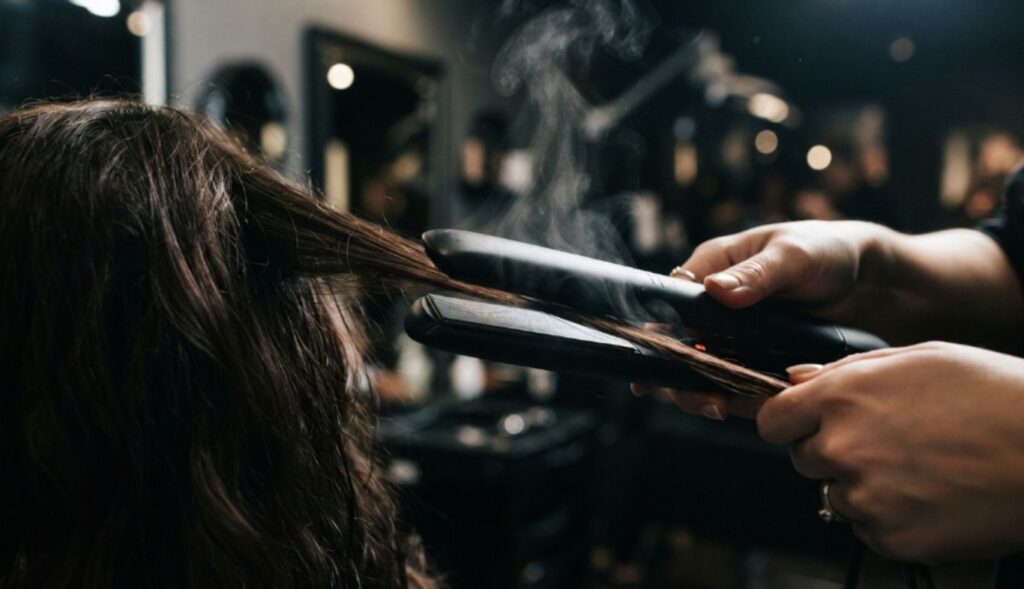
More heat doesn’t automatically mean better curls.
Choose a temperature appropriate for your hair and tool, and avoid repeatedly passing the hot tool over the same section.
If you’re regularly using heat styling, hair-health guidance from dermatology organizations is worth reviewing. The American Academy of Dermatology specifically discusses styling practices that can contribute to brittle, frizzy, or lackluster hair.
Making Every Curl Identical
Perfectly matching curls can make the hairstyle look rigid.
Vary the directions and section sizes for a more natural finish.
Brushing Too Aggressively
Once the curls cool, gently separate them.
A rough brushing session can destroy definition and create unwanted frizz.
Using Too Much Product
Layering five heavy products onto the hair doesn’t necessarily produce five times the glamour.
Start light. Add more only when necessary.
Ignoring the Face-Framing Pieces
The front sections can completely change the hairstyle.
Take your time here. They should blend into the overall curl pattern while opening up the face.
Let the Hair Cool Before Styling It Further
Cooling is one of the simplest ways to improve curl longevity.
Don’t immediately pull, brush, or heavily manipulate the hair.
Use Flexible Hold
A flexible hairspray allows the hairstyle to move.
That’s particularly useful for loose gyaru curls because movement is part of the aesthetic.
Sleep Strategically
If you want to preserve the style overnight, loosely gather the hair rather than tying it tightly.
A loose, high ponytail or soft bun can reduce pressure on the curls. A smooth pillowcase may also reduce friction.
The exact method depends on your hair texture and how easily it loses its shape.
Refresh Instead of Re-Curling Everything
The next day, don’t automatically heat-style your entire head again.
Identify the sections that actually need attention.
A quick touch-up around the face and crown may be enough to restore the overall appearance.
This approach also reduces unnecessary repeated heat exposure.
Everyday Gyaru Hair
For daytime styling, keep the volume moderate.
Use large curls, minimal teasing, and soft face-framing pieces.
A neutral outfit paired with bouncy hair can create a polished look without appearing overly formal.
Date Night
Increase definition around the face.
You can also add a little more crown volume and use a glossy finishing product.
The goal is romantic rather than rigid.
Formal Events
For weddings, parties, or evening events, make the curls more structured.
Consider adding:
- Decorative clips
- Pearl pins
- Ribbons
- Small bows
- Rhinestone accessories
Keep the accessories concentrated in one area so the hairstyle doesn’t become visually crowded.
Casual Weekend Styling
A softer version works beautifully for casual outfits.
Let the curls loosen naturally and embrace a slightly undone finish.
Sometimes the “I just threw this together” effect is half the charm.
Gyaru Hair Accessories That Complete the Look
Accessories can make a familiar hairstyle feel more distinctly gyaru-inspired.
Ribbons and Bows
Small bows create a feminine finish.
Place one near a half-up section or slightly behind the ear.
Decorative Clips
Pearl, crystal, metallic, or pastel clips can highlight one side of the hairstyle.
Headbands
A narrow headband can add structure without hiding the curls.
Choose one that complements your outfit rather than competing with it.
Half-Up Styles
A half-up hairstyle is an especially useful option when you want to show off the volume of the curls.
Pull back the crown gently and leave plenty of movement around the sides.
FAQs:
1. What are Classic Loose Gyaru Curls?
Classic Loose Gyaru Curls are a voluminous hairstyle featuring large, soft curls, face-framing movement, lifted roots, and a feminine finish. Unlike tight ringlets, the curls are generally relaxed and flowing.
2. What curling iron size is best for loose gyaru curls?
A larger barrel is usually suitable for creating loose, glamorous waves, but the best size depends on your hair length and desired curl pattern. Longer hair can generally accommodate larger barrels.
3. Should I curl my hair toward or away from my face?
For the front sections, curling away from the face is a popular choice because it creates an open, face-framing effect. Throughout the rest of the hair, alternating directions can add movement.
4. How do I make gyaru curls last longer?
Start with properly prepared, completely dry hair, use appropriate styling products, allow the curls to cool before brushing, and finish with flexible-hold hairspray. Touching the hair less can also help preserve the shape.
5. Can I create gyaru curls on short hair?
Yes. Short hair can use the same principles, although the result will be more compact. Focus on volume, large bends, and face-framing movement rather than trying to recreate extremely long cascading curls.
6. Can fine hair hold loose gyaru curls?
Yes, although fine hair may require more preparation. Lightweight volumizing products, careful sectioning, and adequate cooling time can help. Avoid heavy products that may weigh the hair down.
7. Are gyaru curls suitable for naturally curly hair?
Absolutely. Naturally curly or wavy hair can be shaped into a gyaru-inspired look by enhancing selected sections and controlling the overall silhouette. You don’t always need to completely straighten the hair first.
8. How often should I use heat tools?
There’s no single schedule that suits every person’s hair. If frequent heat styling leaves your hair dry, brittle, or breaking, reduce heat exposure and reconsider your technique and products. Dermatologist-backed hair-care advice can help you identify styling habits that may contribute to damage.
9. Why do my curls turn into frizzy waves?
Common causes include excessive manipulation, insufficient product support, humidity, brushing too aggressively, or using sections that are too large for your hair. Try smaller sections initially and gently loosen them after the curls cool.
10. Can I wear loose gyaru curls casually?
Definitely. In fact, a softer version is excellent for everyday wear. Reduce the root volume, use larger curls, and allow the ends to relax naturally.
Conclusion:
Classic Loose Gyaru Curls are less about following a rigid formula and more about creating a recognizable combination of volume, softness, movement, and glamour.
The most important elements are simple: prepare the hair properly, create controlled volume, use medium-to-large sections, vary your curl directions, frame the face, let the curls cool, and finish lightly.
From there, experiment.
You might prefer dramatic crown volume, softer waves, bigger face-framing curls, or a subtle everyday interpretation. You can add ribbons for a playful finish or keep the hairstyle sleek and minimal.
Most importantly, don’t chase perfection. The beauty of this style comes from movement. A few curls sitting slightly differently can actually make the final look more natural.
With practice, the seven-step method becomes second nature. Before long, you’ll be able to look at your hair, divide it into sections, and know exactly where you want volume, where you want definition, and where you want softness.