

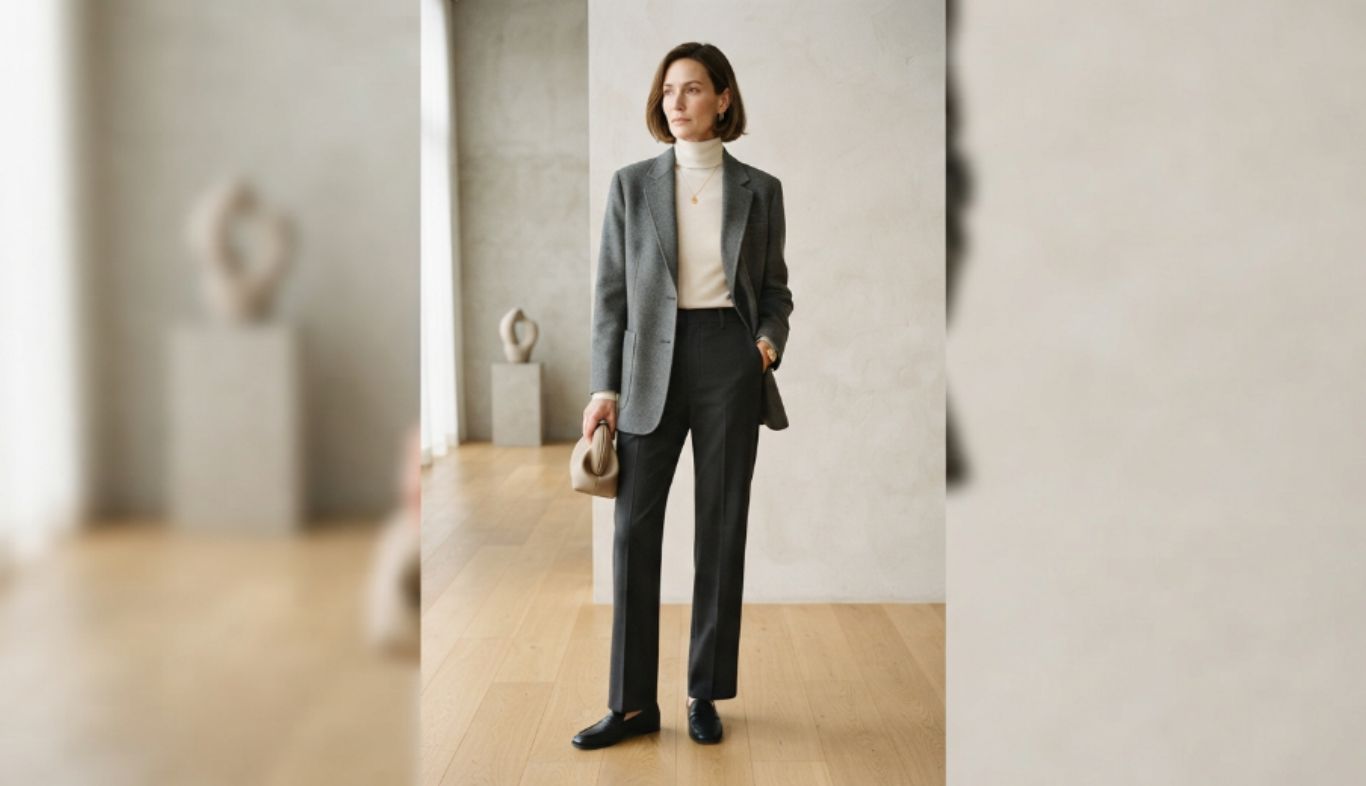
Minimalist fashion for women is more than wearing neutral colors or owning fewer clothes. It’s a thoughtful approach to personal style that focuses on simplicity, versatility, quality, and confidence. Instead of filling your wardrobe with pieces you rarely wear, minimalist dressing encourages you to choose clothing that works harder, lasts longer, and genuinely suits your lifestyle.
The beauty of minimalist style is that it doesn’t have to look boring. In fact, a carefully planned minimalist wardrobe can look polished, modern, sophisticated, and completely personal. A simple white shirt can become office wear, weekend clothing, or evening attire depending on how you style it. Likewise, a well-cut blazer, straight-leg trousers, or classic handbag can create dozens of combinations.
This guide explores minimalist fashion for women from the ground up. You’ll learn how to build a capsule wardrobe, choose essential clothing, combine colors, avoid common styling mistakes, and create elegant outfits without constantly buying something new.
1. Understanding Minimalist Fashion for Women
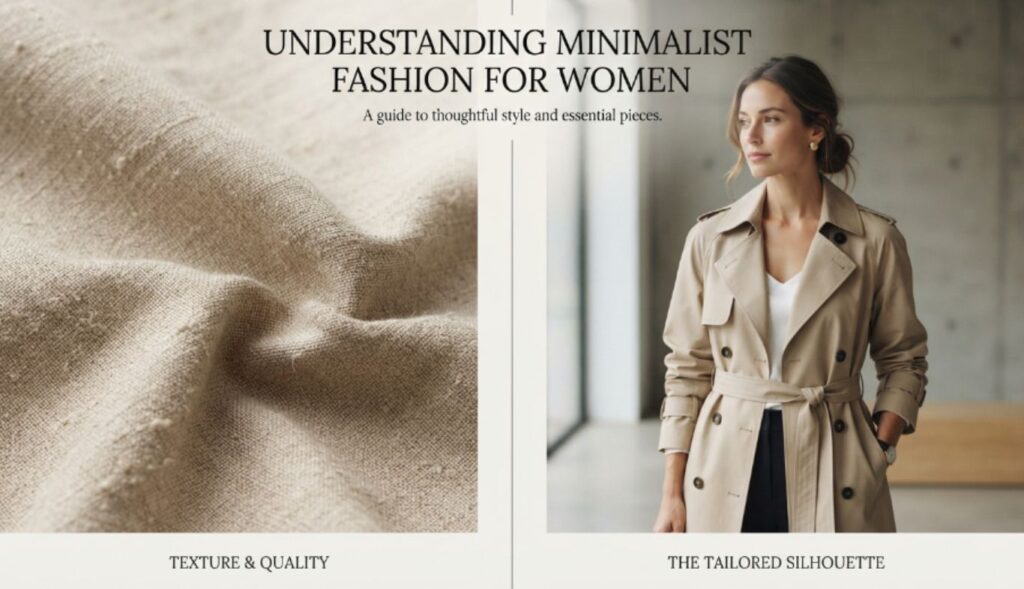
Minimalist fashion for women is based on one simple idea: less clothing can create more styling possibilities when every item is chosen carefully.
A minimalist wardrobe doesn’t necessarily mean owning only 20 pieces. There’s no universal number that defines minimalism. Someone who works from home may need a completely different wardrobe from someone who attends a corporate office every day. The goal is to create a collection that matches your real life.
1.1 Simplicity and Intentional Dressing
Intentional dressing means thinking about why you’re buying and wearing something.
Before purchasing a new top, for example, consider:
- Does it fit my existing wardrobe?
- Can I style it in at least three ways?
- Does it suit my lifestyle?
- Is it comfortable?
- Will I still like it next year?
- Does the quality justify the price?
These questions help separate genuine wardrobe needs from impulse purchases. Minimalist style also emphasizes clean silhouettes. Straight-leg trousers, simple knitwear, structured shirts, tailored coats, and understated accessories can form the foundation of a polished appearance.
However, simplicity doesn’t mean eliminating personality. You can still wear statement earrings, colorful shoes, printed scarves, or a distinctive handbag. The difference is that statement pieces become intentional accents rather than visual clutter.
1.2 Quality Over Quantity
One of the strongest principles of minimalist fashion is buying fewer but better pieces. A cheap shirt that loses its shape after several washes may cost less initially, but replacing it repeatedly isn’t necessarily economical. A well-made shirt with durable stitching and a fabric suited to your lifestyle may offer much better long-term value.
Look for:
- Strong seams
- Reliable zippers and buttons
- Comfortable, durable fabrics
- Good construction
- Appropriate weight for the season
- Easy-care materials when practical
Natural fibers such as cotton, linen, wool, and silk can be useful in minimalist wardrobes, while high-quality blends can also offer durability and easy maintenance.
The best fabric depends on the garment and your lifestyle. A delicate fabric isn’t automatically better just because it’s expensive.
1.3 Versatility and Functionality
A minimalist garment should ideally work with several other pieces.
For example, a beige blazer might be worn with:
- White T-shirt + jeans
- Black trousers + blouse
- Midi skirt + loafers
- Straight-leg pants + knit top
- Dark denim + sneakers
That’s the real power of a versatile wardrobe. Instead of asking, “Is this beautiful?” ask, “How many ways can I realistically wear this?” A beautiful garment that works with nothing else may spend most of its life hanging in your closet. A simple garment that works with 10 other pieces can become one of your wardrobe heroes.
2. Building a Minimalist Wardrobe
Building a minimalist wardrobe doesn’t mean throwing everything away overnight. A more practical approach is to edit your closet gradually.
Start by examining what you already own. Separate your clothes into categories such as frequently worn, occasionally worn, rarely worn, damaged, and sentimental. Don’t immediately discard sentimental pieces. Minimalism is supposed to make life easier, not create unnecessary stress.
2.1 Tops and Shirts
A strong minimalist wardrobe usually benefits from a few dependable tops.
Consider:
- White or cream T-shirt
- Black or charcoal T-shirt
- Classic button-down shirt
- Lightweight knit sweater
- Fine-gauge cardigan
- Simple blouse
- Neutral long-sleeve top
These basics don’t have to be completely plain. Texture, subtle patterns, interesting collars, or unusual cuts can add personality without making an outfit difficult to coordinate.
A white shirt, for example, can look completely different depending on whether you pair it with denim, tailored trousers, a long skirt, or a blazer.
2.2 Bottoms
Bottoms should complement the tops you already own.
Useful options include:
- Straight-leg jeans
- Tailored black trousers
- Neutral wide-leg trousers
- Midi skirt
- Simple casual pants
- Dark denim
The exact selection depends on your lifestyle. You don’t need every option. If you live in jeans, invest in jeans you genuinely love. If you work in a formal environment, prioritize tailored trousers and skirts instead. The idea is to make your wardrobe reflect your actual routine rather than an imaginary lifestyle.
2.3 Dresses and Outerwear
A minimalist wardrobe can benefit from one or two versatile dresses. A simple black, navy, brown, or neutral dress can transition between occasions through accessories and layers. Outerwear is particularly important because coats and jackets often dominate an outfit.
Useful choices can include:
- Tailored blazer
- Classic trench coat
- Wool coat
- Denim jacket
- Lightweight utility jacket
Choose outerwear based on your climate. There’s no point buying a heavy wool coat if you live somewhere warm throughout most of the year.
2.4 Shoes and Accessories
Shoes can dramatically change the mood of minimalist outfits.
A practical collection might include:
- Clean white or neutral sneakers
- Loafers
- Simple flats
- Ankle boots
- Minimal sandals
- One dressier shoe
Again, these are suggestions rather than rules. Accessories should complete the outfit rather than overwhelm it.
Consider:
- Structured handbag
- Leather or fabric belt
- Simple watch
- Small earrings
- Delicate necklace
- Neutral scarf
- Classic sunglasses
A minimalist outfit can become much more interesting through one carefully selected accessory.
3. Creating Elegant Minimalist Outfits
The difference between a basic outfit and an elegant minimalist outfit often comes down to fit, proportion, texture, and styling.
You don’t need expensive designer clothing to look polished. A modest wardrobe can appear sophisticated when the pieces fit well and work together.
3.1 Neutral Color Palettes
Neutral colors are popular in minimalist wardrobes because they’re easy to combine.
Common choices include:
- White
- Cream
- Beige
- Taupe
- Gray
- Navy
- Brown
- Black
- Olive
You don’t have to use only neutrals, though. A muted blue sweater, burgundy handbag, or forest-green skirt can add color while maintaining a refined appearance. One useful strategy is to choose a base palette of three to five colors and then add occasional accent shades.
For example:
Base: black, cream, gray, camel
Accent: burgundy This makes coordinating outfits much easier.
3.2 Layering Techniques
Layering gives minimalist clothing depth without requiring excessive accessories.
Try combinations such as: T-shirt + cardigan + tailored trousers Button-down shirt + blazer + jeans Slip-style dress + knit sweater + ankle boots Turtleneck + blazer + wide-leg trousers The key is to avoid adding layers simply for the sake of adding them. Each layer should have a function or improve the overall silhouette. Texture can also create interest. Combine smooth cotton with knitwear, denim with wool, or linen with leather-like accessories.
3.3 Proportion and Fit
Fit may be the most important part of minimalist styling. When an outfit contains fewer elements, every piece becomes more visible. Poorly fitting clothing can therefore make an otherwise beautiful outfit look unfinished.
Pay attention to:
- Shoulder seams
- Trouser length
- Sleeve length
- Waist placement
- Overall silhouette
- Balance between loose and fitted pieces
A useful rule is to balance proportions. If you’re wearing wide-leg trousers, a fitted or neatly tucked top can create definition. If your top is oversized, slimmer trousers can provide contrast. These aren’t strict fashion laws. They’re simply useful starting points.
3.4 Casual Minimalist Looks
For everyday dressing, try combining comfort with structure.
A simple casual outfit could be: White T-shirt + straight-leg jeans + loafers + structured handbag
Another option is: Knit sweater + wide-leg trousers + clean sneakers
For warmer weather: Linen shirt + tailored shorts + simple sandals The trick is to avoid looking overly casual by adding one polished element. A structured handbag, sleek shoes, or tailored jacket can instantly elevate a basic outfit.
3.5 Workwear and Smart Casual Style
Minimalist fashion works particularly well for professional clothing because clean lines naturally create a polished appearance.
A simple office combination could include: Blazer + blouse + tailored trousers + loafers
For a less formal workplace: Knit top + dark jeans + blazer + flats
For formal settings: Tailored trousers + crisp shirt + structured blazer + classic pumps Keep accessories understated if your workplace is conservative. If the environment is creative, you can introduce more personality through color, jewelry, or interesting silhouettes.
4. Shopping Strategically
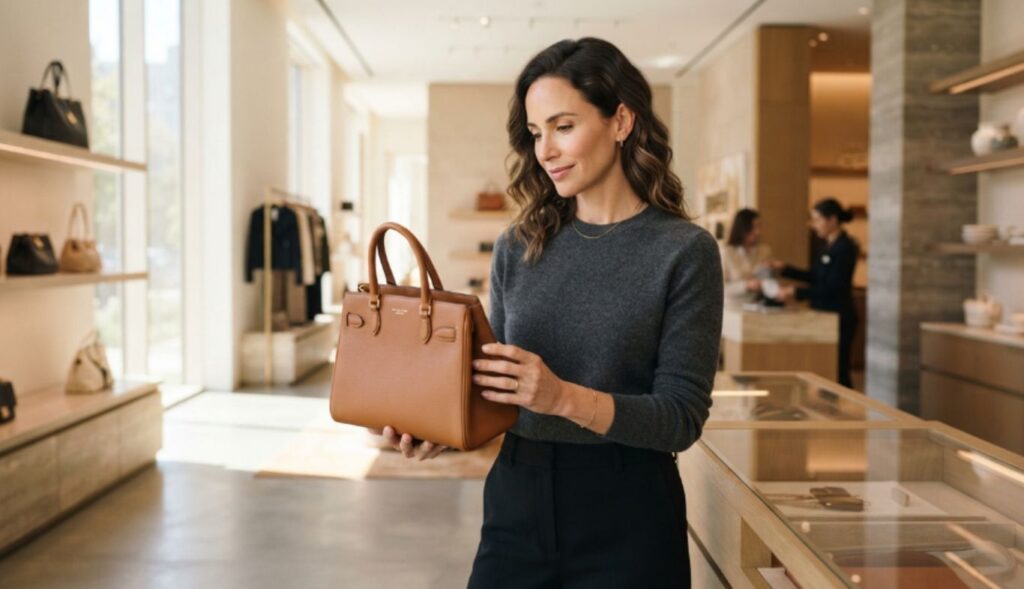
Minimalism becomes much easier when you stop shopping simply because something is attractive. Before buying a garment, consider its role in your existing wardrobe.
4.1 The One-In, One-Out Rule
The one-in, one-out approach means that when you purchase a new item, you consider removing a similar item. For example, if you buy a new black blazer, ask whether your current black blazer still serves you. This prevents wardrobe growth from becoming endless.
It’s especially useful for categories that tend to accumulate quickly, such as:
- T-shirts
- Jeans
- Shoes
- Handbags
- Sweaters
- Jackets
4.2 Choosing Quality Fabrics
Fabric should match the purpose of the garment. For warm weather, breathable fabrics can improve comfort. Linen and lightweight cotton are popular choices.
For cooler conditions, wool and quality knit fabrics can provide warmth. For everyday basics, cotton blends can offer practicality and easy care.
The important thing is to understand how a fabric behaves rather than assuming that one material is always superior.
Check care instructions before buying, too. A garment that requires expensive professional cleaning after every few wears may not be practical for your lifestyle.
4.3 Questions to Ask Before Buying
Use this quick checklist:
- Can I create at least three outfits with it?
- Does it work with my existing color palette?
- Is it comfortable?
- Does it fit properly?
- Is it appropriate for my lifestyle?
- Would I buy it if it weren’t on sale?
- Do I already own something similar?
- Is it worth the maintenance required?
That last question is often overlooked. A bargain isn’t really a bargain if you never wear it.
5. Common Minimalist Fashion Mistakes
Minimalist fashion can go wrong when simplicity becomes overly restrictive.
Mistake 1: Thinking Everything Must Be Beige
Minimalism isn’t a color. You can create a minimalist wardrobe with navy, red, green, pink, denim, or other colors. The important factor is coordination and intentionality.
Mistake 2: Buying Too Many “Basics”
A minimalist wardrobe doesn’t require 15 white shirts. Basics should support your lifestyle. If you already have enough T-shirts, purchasing another one because it’s labeled a “wardrobe essential” doesn’t make your wardrobe better.
Mistake 3: Ignoring Personal Style
Minimalism should help express your personality. If you love dramatic earrings, keep them. If you enjoy colorful sneakers, wear them. If you prefer feminine dresses, don’t force yourself into trousers simply because they’re considered minimalist.
Mistake 4: Prioritizing Trends Over Longevity
Trends can be fun, but a wardrobe built entirely around short-lived trends can become expensive and difficult to coordinate. Instead, use trends selectively. One modern accessory can refresh several timeless outfits.
Mistake 5: Confusing Minimalism With Cheap Clothing
Minimalist style doesn’t mean buying the cheapest possible clothes. The goal is thoughtful consumption, not simply low prices.
6. Seasonal Minimalist Styling
A minimalist wardrobe should evolve with the seasons.
Spring
Focus on:
- Lightweight sweaters
- Button-down shirts
- Trench coats
- Straight-leg jeans
- Loafers
- Lightweight skirts
Soft neutrals and lighter fabrics can create a fresh spring appearance.
Summer
Choose breathable pieces such as:
- Linen shirts
- Cotton dresses
- Simple tank tops
- Tailored shorts
- Wide-leg trousers
- Minimal sandals
Keep accessories simple and practical.
Autumn
Autumn is ideal for layering.
Try:
- Knit sweaters
- Blazers
- Straight jeans
- Ankle boots
- Lightweight scarves
- Tailored coats
Earth tones such as brown, olive, cream, and burgundy work particularly well.
Winter
Prioritize warmth without sacrificing structure.
Useful pieces include:
- Wool coats
- Turtlenecks
- Knit sweaters
- Tailored trousers
- Boots
- Scarves
- Gloves
Layering becomes especially valuable because it allows a smaller wardrobe to handle changing temperatures.
7. 11 Powerful Minimalist Fashion Rules to Remember
If you want a quick reference, keep these principles in mind:
- Buy for your real lifestyle.
- Choose versatile pieces.
- Prioritize fit.
- Build around a practical color palette.
- Invest in quality where it matters.
- Avoid unnecessary duplicates.
- Use accessories to express personality.
- Balance proportions.
- Don’t confuse minimalism with boring clothing.
- Review your wardrobe regularly.
- Wear what makes you feel confident.
The final rule is arguably the most important. Fashion is personal. A minimalist wardrobe should make getting dressed easier, not turn it into another set of rules you have to follow.
8. Frequently Asked Questions
What is minimalist fashion for women?
Minimalist fashion for women focuses on simple, versatile, functional, and well-chosen clothing. It emphasizes quality, coordination, comfort, and personal style rather than owning large quantities of clothing.
How many clothes should a minimalist woman own?
There isn’t a fixed number. The ideal wardrobe depends on your lifestyle, climate, occupation, hobbies, and laundry routine. A minimalist wardrobe is defined by intentionality rather than a specific item count.
What colors are best for minimalist fashion?
Black, white, cream, beige, gray, navy, brown, and olive are common minimalist colors because they’re easy to combine. However, minimalist fashion can include virtually any color when used thoughtfully.
Can minimalist fashion be colorful?
Absolutely. Minimalism is about simplicity and intentionality, not avoiding color. A colorful dress, bright handbag, or bold shoe can work beautifully within a minimalist wardrobe.
What are the most important minimalist wardrobe essentials?
Useful essentials can include a well-fitting T-shirt, button-down shirt, jeans, tailored trousers, blazer, versatile dress, comfortable shoes, practical outerwear, and a structured handbag. Your personal essentials should reflect your lifestyle.
Is minimalist fashion expensive?
It doesn’t have to be. Minimalism can actually reduce unnecessary spending because you focus on buying fewer items that you genuinely need and expect to wear frequently.
How do I start a minimalist wardrobe?
Begin by evaluating what you already own. Keep pieces you wear and love, identify gaps, remove genuine duplicates, and gradually replace worn-out items with versatile alternatives.
Can minimalist fashion work for formal events?
Yes. A simple tailored dress, sophisticated suit, or coordinated separates can create an elegant formal look. Accessories and footwear can change the level of formality without requiring an entirely separate wardrobe.
Is minimalist fashion sustainable?
Minimalist dressing can support more conscious consumption by encouraging people to buy fewer unnecessary items and use existing clothing more effectively. However, sustainability also depends on factors such as manufacturing, materials, garment lifespan, and disposal.
How can I make a minimalist outfit look less boring?
Use texture, proportion, layering, accessories, and subtle color contrasts. A simple outfit can become visually interesting through a textured knit, structured bag, statement earrings, or an unexpected shoe.
Conclusion
Minimalist fashion for women isn’t about following a strict formula or reducing your wardrobe to a tiny collection of beige clothing. It’s about making thoughtful choices that simplify your daily life while allowing your personality to shine. Start with the clothes you already own. Identify your favorite silhouettes, most-worn colors, and genuinely useful pieces. Then build slowly around those discoveries.
A well-designed minimalist wardrobe should give you more outfit possibilities, fewer frustrating mornings, and greater confidence in what you wear. And once you understand your personal style, you’ll probably find that you don’t need a closet packed to the brim to look effortlessly polished. The real goal isn’t simply to own less. It’s to make every piece you own count.