

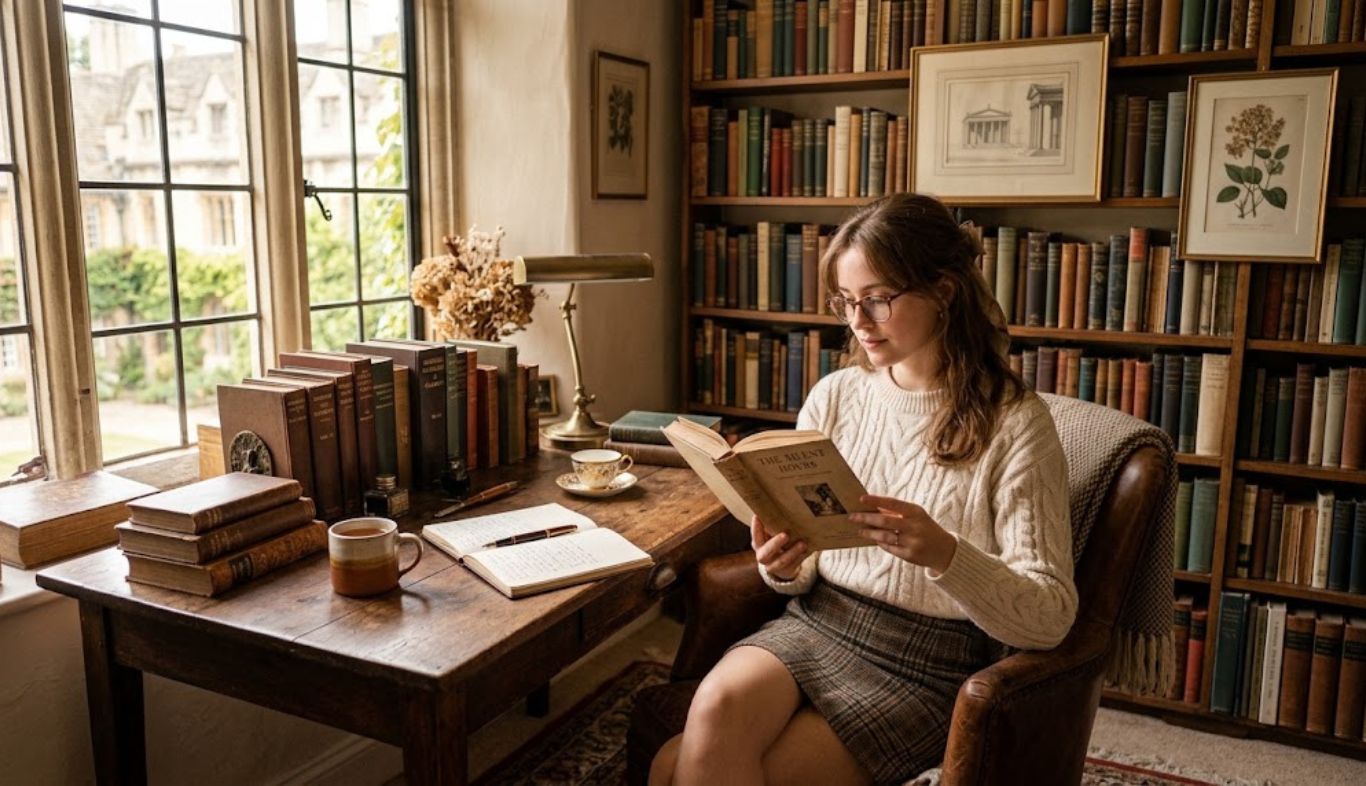
The Light Academia Aesthetic has become popular because it offers something more meaningful than a collection of pretty photographs. At its heart, it celebrates curiosity, education, creativity, beauty, and the simple pleasure of spending time with ideas. Picture a sunlit room with tall windows, an old wooden desk, a stack of novels, handwritten notes, a cup of tea, and a vase filled with fresh flowers. Imagine someone wearing tailored trousers, a soft sweater, loafers, and a vintage-inspired watch while walking through a historic library. That’s the general mood.
However, you don’t need to live in an old European university or own a massive personal library to enjoy it. The Light Academia Aesthetic can work in a modern apartment, a small bedroom, a university dorm, or even a digital workspace. What matters most is the feeling. The style favors warmth over gloom, curiosity over perfection, and timeless pieces over short-lived trends. It can also encourage healthier habits, such as reading more, journaling, visiting museums, learning a language, practicing an instrument, or simply creating a quiet space where you can think. The following 21 ideas will help you understand the aesthetic and, more importantly, make it practical.
Understanding the Light Academia Aesthetic
What Does Light Academia Mean?
Light Academia is an aesthetic and lifestyle concept influenced by classical education, literature, philosophy, art, architecture, and traditional academic environments. It shares some DNA with Dark Academia, but its visual language is brighter and generally more optimistic. The Light Academia Aesthetic often uses natural light, neutral colors, vintage textures, classic silhouettes, and cultural references.
Its philosophy can be summarized with a few simple ideas:
- Stay curious.
- Appreciate beauty.
- Read widely.
- Learn continuously.
- Create something.
- Slow down when possible.
- Find meaning in ordinary routines.
In other words, you don’t have to pretend you’re living in a 19th-century novel. The point is to make modern life feel a little more intentional.
The Main Visual Characteristics
Several features appear again and again in this aesthetic:
- Natural light
- Cream and beige colors
- Classic clothing
- Traditional architecture
- Books and stationery
- Artwork and sculpture
- Wooden furniture
- Vintage-inspired accessories
- Fresh flowers
- Quiet, intellectual activities
The result is sophisticated without being excessively formal.
Light Academia vs. Dark Academia
The two aesthetics are closely related, but they’re not identical.
| Feature | Light Academia | Dark Academia |
|---|---|---|
| Mood | Optimistic and peaceful | Mysterious and dramatic |
| Colors | Cream, ivory, beige, tan | Black, charcoal, burgundy |
| Lighting | Bright sunlight | Candlelight and shadows |
| Fashion | Soft tailoring | Dark tailoring |
| Materials | Linen, cotton, light wood | Leather, wool, dark wood |
| Themes | Learning, art, beauty | Mystery, tragedy, philosophy |
| Interior feel | Airy and warm | Moody and atmospheric |
Neither approach is necessarily better. Some people even combine them, using the lighter palette during spring and summer and introducing darker details during autumn and winter.
The Philosophy Behind the Look
Perhaps the most important point is that the Light Academia Aesthetic isn’t only about appearance. A beautiful desk covered in books doesn’t automatically create an academic lifestyle. If you want the aesthetic to feel authentic, let your interests guide your choices.
Read a novel because you’re genuinely curious. Visit a gallery because you want to understand art. Keep a journal because writing helps you think. Learn about architecture because historic buildings fascinate you. That’s where the style becomes more than decoration.
Building the Light Academia Aesthetic Through Fashion

Start With a Neutral Wardrobe
Fashion is one of the easiest ways to introduce the Light Academia Aesthetic into everyday life. You don’t need to replace your entire wardrobe. Instead, focus on versatile basics that can be combined in different ways.
Useful colors include:
- Ivory
- Cream
- Oatmeal
- Camel
- Beige
- Tan
- Soft brown
- Olive
- Muted navy
- Dusty blue
- Warm gray
These shades work particularly well because they’re easy to combine.
Essential Clothing Pieces
A practical academic wardrobe might include:
| Clothing Item | Why It Works |
|---|---|
| Knit sweater | Adds warmth and texture |
| Oxford shirt | Creates a classic academic foundation |
| Tailored trousers | Provides structure |
| Pleated skirt | Gives a vintage-inspired appearance |
| Cardigan | Adds softness |
| Wool coat | Works beautifully in cooler weather |
| Loafers | Creates a polished finish |
| Simple blouse | Easy to dress up or down |
| Straight-leg jeans | Makes the look more casual |
| Trench coat | Adds timeless sophistication |
The trick is balance. If everything looks vintage, the outfit can start feeling like a costume. Pairing classic items with modern basics keeps the result natural.
Women’s Light Academia Fashion
For women, a simple outfit could consist of a cream blouse, brown pleated trousers, leather loafers, and a structured tote bag. Another option is a midi skirt with a knitted cardigan, simple jewelry, ankle socks, and ballet flats. For warmer weather, try a linen shirt with tailored shorts or wide-leg trousers. Add a leather belt and a pair of sunglasses for a relaxed but polished appearance. The Light Academia Aesthetic favors pieces that look comfortable enough to live in while still appearing thoughtful.
Men’s Light Academia Fashion
Men can create the look with surprisingly simple pieces.
Consider:
- Beige chinos
- White Oxford shirts
- Brown loafers
- Knit sweaters
- Tweed or wool jackets
- Straight-leg trousers
- Neutral overshirts
- Leather belts
- Simple watches
A particularly effective combination is a pale blue button-down shirt, cream trousers, brown loafers, and a camel cardigan. You don’t need complicated layering. Clean proportions often do most of the work.
Accessories Matter
Accessories can quietly reinforce the aesthetic. Consider a leather satchel, canvas tote, vintage-style watch, simple gold or silver jewelry, tortoiseshell glasses, a silk scarf, or a classic fountain pen.
Don’t overdo it, though. One or two distinctive accessories are usually more effective than wearing every academic-inspired item at once.
Seasonal Styling
The Light Academia Aesthetic can easily change with the seasons.
Spring: linen shirts, light cardigans, loafers, floral skirts, and pastel accents.
Summer: cotton trousers, relaxed shirts, linen dresses, woven bags, and leather sandals.
Autumn: knitwear, corduroy trousers, wool coats, scarves, and loafers.
Winter: turtlenecks, long coats, wool trousers, textured sweaters, and leather boots. This flexibility is one reason the style works so well in real life.
Creating a Light Academia Aesthetic Home and Lifestyle
Begin With Light and Space
Interior design is where the Light Academia Aesthetic can become especially expressive. Start with natural light. Keep windows relatively unobstructed, use lightweight curtains, and arrange furniture so daylight can spread through the room.
If your space doesn’t receive much natural light, don’t worry. Warm lamps, cream textiles, mirrors, and lighter walls can help create a similar atmosphere. The objective isn’t to make your room look old. It’s to make it feel warm, thoughtful, cultured, and comfortable.
Choose a Warm Color Palette
A strong interior palette might include:
- Warm white
- Cream
- Ivory
- Beige
- Sand
- Caramel
- Walnut
- Muted green
- Dusty blue
- Antique brass
These colors work especially well when combined with natural materials.
Use Traditional Materials
Materials are just as important as colors.
Try incorporating:
- Wood
- Linen
- Cotton
- Wool
- Leather
- Ceramic
- Brass
- Glass
- Natural stone
A wooden desk with a linen lamp shade and ceramic vase can instantly create a more refined atmosphere. You don’t need expensive antiques. Even affordable furniture can look elegant when the colors and materials work together.
Create an Academic Reading Corner
A reading corner is one of the easiest ways to introduce the Light Academia Aesthetic.
You need only a few elements:
- A comfortable chair
- A small side table
- A warm reading lamp
- A small stack of books
- A soft throw
- A plant or vase of flowers
If you have room, add a wooden bookshelf. The goal is to create a space that makes you want to sit down and read rather than endlessly scroll.
Design a Study Desk
A study space doesn’t need to be elaborate. A simple wooden or wood-effect desk can serve as the foundation. Add a desk lamp, notebook, pen holder, calendar, and a few books.
Keep the surface reasonably uncluttered. Academic-inspired rooms can look beautiful with objects, but too much clutter quickly destroys the calm atmosphere. Try using a small tray to organize everyday items.
Decorate With Books
Books are central to the Light Academia Aesthetic, but they shouldn’t be treated purely as decoration. Choose books that genuinely interest you. You might collect novels, poetry, philosophy, history, art books, biographies, or books about architecture and culture.
Arrange them by subject, size, or color if you enjoy the visual effect. More importantly, read them. A shelf full of unread books can look attractive, but a shelf with notes, bookmarks, and well-loved volumes tells a much more interesting story.
Add Art and Classical Details
Artwork can give a room personality. Consider botanical prints, classical paintings, architectural sketches, landscape artwork, vintage maps, or black-and-white photography. Frames in wood, brass, or understated black can work particularly well.
Don’t Forget Flowers
Fresh flowers are an easy way to soften an academic interior. You don’t need elaborate arrangements. A small bunch of white roses, daisies, baby’s breath, wildflowers, or greenery in a simple ceramic vase can be enough. Dried flowers can also work, especially when you want a more permanent decoration.
Build the Lifestyle, Not Just the Room
This is perhaps the most important principle. The Light Academia Aesthetic becomes more meaningful when your habits support the atmosphere. Instead of merely buying a vintage-looking notebook, use it for journaling. Instead of placing books on a shelf, read them.
Instead of displaying art prints, learn about the artists. Instead of purchasing a fancy desk, actually use it to study, write, draw, or work. That small shift makes the aesthetic feel genuine.
Academic Hobbies to Try
You could experiment with:
- Reading classic literature
- Creative writing
- Journaling
- Poetry
- Sketching
- Painting
- Calligraphy
- Learning a musical instrument
- Studying languages
- Visiting museums
- Exploring architecture
- Photography
- Gardening
- Chess
- Classical music
- Historical research
You don’t need to master any of these activities. Curiosity is enough.
Create a Slow Morning Routine
A calm morning can capture the spirit of the Light Academia Aesthetic beautifully. Wake up without immediately reaching for social media. Open the curtains, make your bed, prepare breakfast, and spend ten minutes reading.
If you have time, write a short journal entry or review your plans for the day. The routine doesn’t need to be perfect. Even fifteen intentional minutes can make a difference.
Make Ordinary Activities Feel Special
One of the aesthetic’s strongest ideas is that ordinary life can be beautiful. Write a letter. Drink tea from a favorite cup. Take a walk through an older part of town. Read in a park. Listen to music while cooking.
Visit a local bookstore. Buy flowers on the weekend. These small rituals can create the sense of richness that people often associate with the Light Academia Aesthetic.
Light Academia Photography and Digital Style
Photograph Natural Moments
For photography, natural light is your best friend. Try taking photographs near windows during the morning or late afternoon. Look for warm shadows, books, handwritten notes, coffee cups, architecture, flowers, and textured fabrics. A slightly imperfect photograph can often feel more authentic than an extremely polished image.
Build a Consistent Color Palette
A cohesive digital feed might use cream, beige, brown, ivory, muted green, and pale blue. Avoid making every photograph identical. Instead, repeat colors and textures subtly. For example, a brown leather bag in one photograph can visually connect with a wooden desk in another.
Digital Desktop Ideas
You can also bring the Light Academia Aesthetic into your digital environment.
Try:
- Cream-colored wallpapers
- Serif fonts
- Minimal icons
- Digital reading lists
- Scanned artwork
- Vintage-inspired calendars
- Organized folders
- Neutral backgrounds
The key is functionality. A beautiful desktop that’s difficult to navigate isn’t particularly academic—or practical.
Affordable Ways to Embrace the Aesthetic
You don’t need a large budget. Start by shopping your existing wardrobe. A white shirt, neutral trousers, simple sweater, and leather-style shoes may already provide the foundation. For interiors, rearrange furniture before buying anything. Move your desk closer to a window. Remove unnecessary clutter. Display books you already own. Add a plant. Thrift stores can also be useful for finding interesting frames, wooden furniture, scarves, sweaters, and old books.
A Simple Budget Strategy
| Budget | What to Focus On |
|---|---|
| $0 | Rearrange, declutter, read, journal |
| Low | Thrifted books, flowers, stationery |
| Moderate | Sweaters, lamps, frames, accessories |
| Higher | Quality furniture, tailored clothing, art |
Quality usually beats quantity. One well-made wool coat can be more useful than several trendy jackets. Likewise, a sturdy wooden desk can last for years.
Common Light Academia Mistakes to Avoid
Mistake 1: Treating It Like a Costume
If every item looks historical, the result can feel artificial. Mix old-inspired pieces with contemporary basics.
Mistake 2: Buying Too Much
You don’t need a complete room makeover. Start with one area, such as your desk or wardrobe.
Mistake 3: Ignoring Comfort
Beautiful clothing isn’t useful if you never want to wear it. Choose fabrics and silhouettes that suit your climate and lifestyle.
Mistake 4: Focusing Only on Appearance
The Light Academia Aesthetic is ultimately connected to curiosity and learning. Don’t let Pinterest-worthy surroundings become more important than the activities you’re actually doing.
Mistake 5: Chasing Perfection
Real academic spaces are used. Books get opened. Notes become messy. Coffee gets spilled. A little imperfection can make the environment feel lived-in.
Making the Aesthetic More Sustainable

A sustainable approach fits naturally with the philosophy of timeless design. Instead of replacing your wardrobe every season, buy fewer pieces that you’ll wear repeatedly. Look after clothing properly. Repair damaged items. Choose durable materials when practical. Thrift furniture and books when you can.
The same principle applies to interiors. A classic wooden desk may stay useful for decades, while a fashionable decorative object might lose its appeal within months. The Light Academia Aesthetic works best when it encourages appreciation rather than constant consumption.
Frequently Asked Questions
1. What exactly is the Light Academia Aesthetic?
The Light Academia Aesthetic is a visual and lifestyle style inspired by literature, education, art, classical architecture, vintage fashion, natural light, and intellectual curiosity. It generally uses brighter, warmer colors than Dark Academia and emphasizes optimism, beauty, creativity, and learning.
2. What colors are associated with Light Academia?
Common colors include cream, ivory, beige, tan, camel, warm brown, oatmeal, muted green, dusty blue, and soft gray. The palette is usually warm and understated rather than highly saturated.
3. How can I start the Light Academia Aesthetic on a budget?
Start with what you already own. Rearrange your room, declutter your desk, read books you already have, wear neutral clothing, and add inexpensive details such as flowers, secondhand frames, or thrifted sweaters. You don’t need to purchase an entirely new wardrobe or room.
4. Is Light Academia only for students?
No. Although education is an important inspiration, anyone can enjoy it. Reading, writing, art, music, photography, history, architecture, and lifelong learning can all be part of the lifestyle.
5. What should I wear for a Light Academia look?
Good starting pieces include button-down shirts, knit sweaters, cardigans, tailored trousers, pleated skirts, loafers, trench coats, wool coats, simple dresses, and leather or canvas bags. Neutral colors make these pieces easy to combine.
6. Can I combine Light Academia with other aesthetics?
Absolutely. It can blend with minimalist, vintage, cottage-inspired, preppy, classic, and even modern styles. The easiest way to combine aesthetics is to maintain a consistent color palette and introduce only a few elements from each style.
7. How do I make my bedroom look Light Academia?
Focus on warm neutral colors, natural textures, books, artwork, wooden furniture, soft lighting, and plants or flowers. A dedicated reading corner or study desk can strengthen the academic feeling without requiring major renovations.
8. Is Light Academia expensive?
It doesn’t have to be. The aesthetic is based more on atmosphere and habits than expensive possessions. Thrifted clothing, secondhand books, existing furniture, homemade artwork, and simple stationery can create a convincing look.
9. What hobbies fit the Light Academia lifestyle?
Reading, journaling, creative writing, painting, drawing, photography, music, language learning, museum visits, architecture, gardening, poetry, and historical research are all good examples.
10. Does Light Academia have to look vintage?
Not at all. Modern spaces and contemporary clothing can still fit the aesthetic. The important elements are the mood, color palette, materials, intellectual interests, and appreciation for timeless design.
Conclusion
The Light Academia Aesthetic isn’t really about recreating someone else’s bedroom, wardrobe, or Instagram feed. It’s about building an environment that encourages you to slow down, notice beauty, and remain curious. Start small. Read a few pages every evening. Keep a journal. Wear the clothes you genuinely enjoy. Put your desk near a window. Display artwork that means something to you. Visit a museum. Learn a new skill. Take a walk without your phone in your hand.
Over time, these small choices create a lifestyle that feels thoughtful and personal. And that’s the real appeal of the Light Academia Aesthetic: it doesn’t demand perfection. It simply invites you to make ordinary life a little more beautiful, intentional, and intellectually curious.