

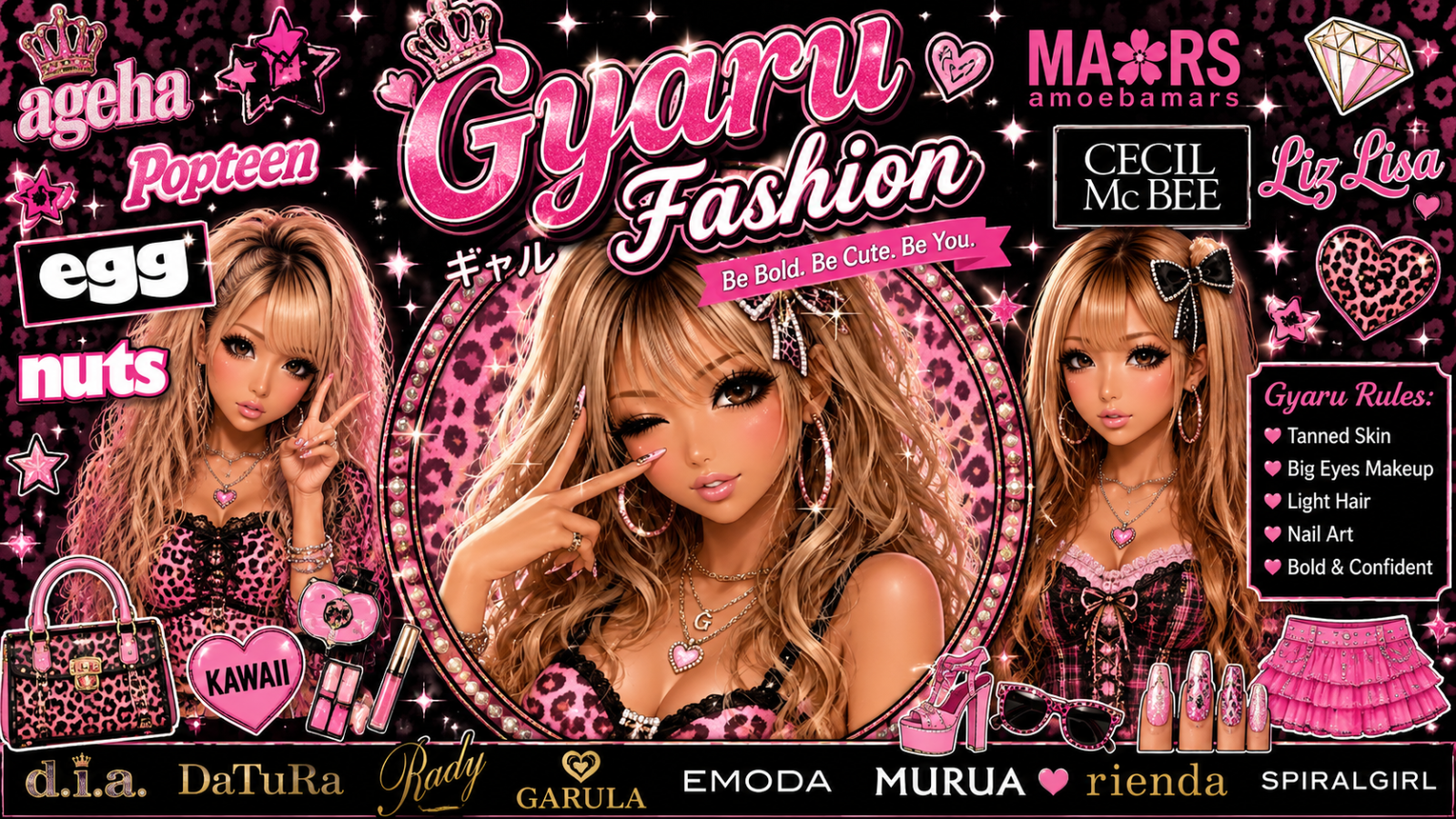
Gyaru Fashion: Japanese fashion has produced countless influential subcultures, but few have left a mark as bold, rebellious, and enduring as Gyaru fashion.
Gyaru Fashion: For many people outside Japan, the word “Gyaru” brings to mind dramatic eyelashes, bleached hair, platform shoes, and glamorous outfits. While those elements are certainly part of the aesthetic, Gyaru is much more than a fashion trend. It is a cultural movement rooted in self-expression, individuality, and resistance to traditional beauty standards.
Over the decades, Gyaru evolved from a youth rebellion in Tokyo into one of the most recognizable Japanese street fashion movements in the world. It has inspired countless fashion enthusiasts, beauty creators, and alternative style communities across the United States, Europe, and Asia.
Today, a new generation is rediscovering Gyaru through TikTok, Instagram, and online fashion communities. Whether you’re completely new to the style or looking to deepen your understanding of its history and substyles, this guide will walk you through everything you need to know.
We’ll explore where Gyaru came from, how it evolved, the most popular Gyaru styles, iconic brands, makeup techniques, and why this fashion movement continues to inspire people decades after its creation.
What Is Gyaru Fashion?
At its core, Gyaru fashion is a Japanese street fashion subculture centered around individuality, confidence, glamour, and self-expression.
The word “Gyaru” comes from the Japanese pronunciation of the English word “gal.” It gained popularity after a jeans advertising campaign in Japan used the phrase “GALS,” which eventually became associated with young women who embraced trendy and unconventional fashion.
However, Gyaru quickly grew beyond simply following trends.
During the late 1980s and early 1990s, many young Japanese women began rejecting traditional expectations surrounding appearance and behavior. Instead of pursuing the conservative beauty ideals commonly promoted in mainstream society, they embraced bold makeup, dyed hair, fashionable clothing, and a highly expressive personal style.
The movement became particularly visible in Tokyo’s famous shopping districts, especially around Shibuya, where teenagers and young adults experimented with increasingly creative looks.
Unlike many fashion movements that focus primarily on clothing, Gyaru developed into a complete lifestyle aesthetic. Fashion, makeup, hairstyles, attitudes, magazines, music preferences, and social circles all contributed to the culture.
What made Gyaru unique was not simply how its followers looked—it was the confidence they projected.
Why Gyaru Was Revolutionary
To understand Gyaru’s significance, it’s important to understand the social environment in which it emerged.
Japanese beauty standards historically emphasized:
- Natural black hair
- Fair skin
- Minimal makeup
- Modest fashion
- Reserved behavior
Gyaru challenged nearly every one of those expectations.
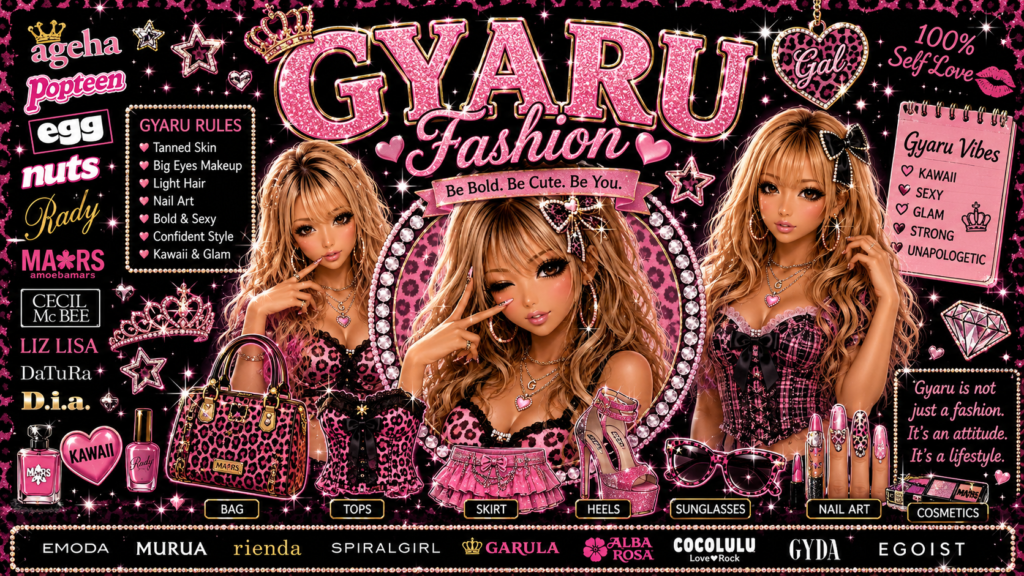
Followers embraced:
- Dyed blonde or brown hair
- Tanned skin
- Dramatic eye makeup
- Platform shoes
- Flashy accessories
- Bold fashion choices
The result was a visual statement that represented freedom and individuality.
Fashion historians often describe Gyaru as one of the most visible youth rebellions in modern Japanese fashion history. It gave young women a way to create identities separate from the social expectations placed upon them.
This spirit of self-expression remains one of the main reasons people continue to connect with Gyaru today.
The History of Gyaru Fashion
The history of Gyaru is far richer than many fashion articles suggest.
Most discussions focus only on the early 2000s, but the movement’s roots stretch back much further.
Early Origins: The 1970s and 1980s
The earliest foundations of Gyaru appeared during Japan’s economic boom years.
Young women gained greater access to fashion magazines, imported trends, and consumer culture. As Western influences became more visible, teenagers began experimenting with hairstyles, makeup, and clothing styles that differed from traditional expectations.
While these early fashion experiments were not yet recognized as Gyaru, they laid the groundwork for what would later become a major cultural movement.
Fashion magazines played a particularly important role by exposing readers to alternative beauty standards and emerging trends.
The Rise of Kogyaru in the 1990s
The 1990s marked the true birth of modern Gyaru culture.
One of the earliest recognizable forms was Kogyaru, a style associated with high school students who customized their uniforms with shorter skirts, loose socks, designer accessories, and fashionable hairstyles.
Kogyaru became highly visible around Shibuya, where young women gathered after school to socialize and shop.
For many teenagers, fashion became a way to express independence.
Media coverage of Kogyaru exploded during the decade, turning the style into a national phenomenon. While some critics viewed it negatively, others recognized it as an important expression of youth identity.
The influence of Kogyaru would eventually shape numerous future Gyaru substyles
The Golden Age of Gyaru
The late 1990s and early 2000s are widely considered the golden age of Gyaru fashion.
This period saw an explosion of creativity and experimentation.
New substyles emerged, magazines gained massive circulation, and specialized fashion brands flourished.
Publications such as Egg Magazine and Popteen became major influences, helping define trends and introducing readers to rising fashion icons.
Entire shopping districts catered to Gyaru consumers.
Fashion brands launched collections specifically designed for different Gyaru aesthetics, while beauty companies introduced products tailored to the movement’s makeup trends.
The early 2000s represented the height of Gyaru’s cultural influence.
Ganguro and the Expansion of Gyaru Identity
One of the most famous and controversial developments was the rise of Ganguro.
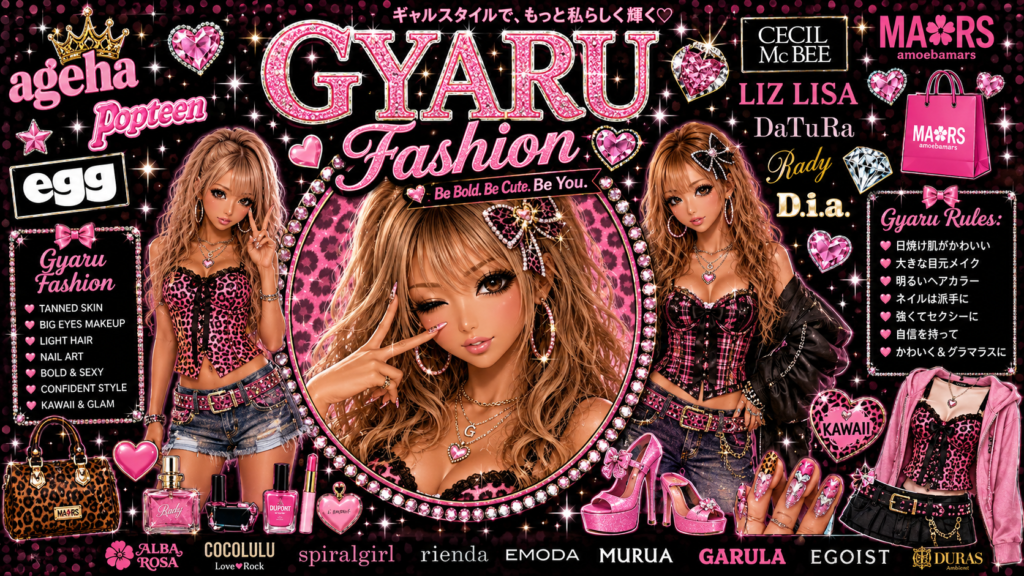
Ganguro pushed beauty norms even further through:
- Deep tanning
- Bleached hair
- White makeup highlights
- Dramatic eye designs
To outsiders, Ganguro often became the defining image of Gyaru culture.
However, Ganguro represented only one branch of a much larger fashion ecosystem.
As the movement expanded, increasingly diverse substyles emerged, each with its own aesthetic principles.
Some embraced princess-inspired elegance.
Others focused on glamour, rock influences, luxury fashion, or mature sophistication.
This diversity became one of Gyaru’s greatest strengths.
The Decline of Mainstream Popularity
By the early 2010s, Gyaru’s dominance began to fade.
Several factors contributed to the decline:
Changing fashion trends shifted toward more natural appearances.
Social media altered how trends spread and evolved.
New fashion subcultures emerged and attracted younger audiences.
Many iconic brands either closed or dramatically changed direction.
As a result, Gyaru gradually disappeared from mainstream Japanese fashion media.
However, it never truly vanished.
Instead, it moved into dedicated communities where enthusiasts continued preserving and evolving the culture.
The Modern Gyaru Revival
Today, Gyaru is experiencing a remarkable revival.
Platforms like TikTok, Instagram, YouTube, and Discord have introduced the aesthetic to entirely new audiences.
Younger fashion enthusiasts are rediscovering:
- Classic Gyaru makeup
- Vintage fashion pieces
- Historic magazines
- Archive photography
- Iconic brands
Modern creators frequently combine traditional Gyaru elements with contemporary fashion trends, creating fresh interpretations that appeal to a global audience.
In many ways, today’s revival demonstrates the lasting influence of the movement.
The core values of confidence, individuality, and creative self-expression remain just as relevant as they were decades ago.
Core Elements of Gyaru Fashion
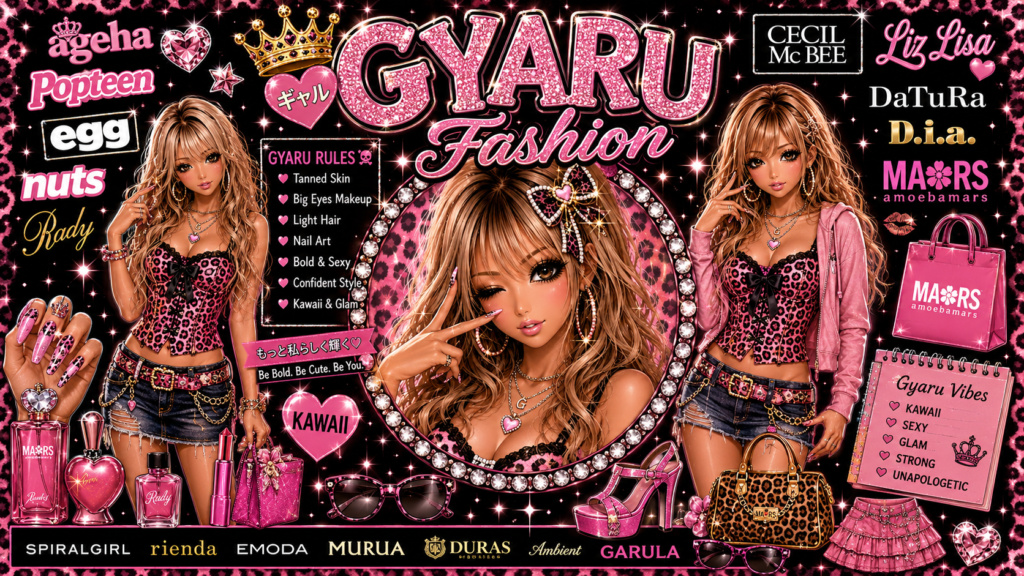
Although the movement contains many different substyles, several characteristics appear throughout most forms of Gyaru fashion.
Understanding these fundamentals helps explain why the aesthetic remains instantly recognizable.
Fashion
Gyaru fashion generally emphasizes glamour and visual impact.
Depending on the substyle, clothing may include:
- Fitted dresses
- Mini skirts
- Platform shoes
- Faux fur accents
- Statement accessories
- Animal prints
- Lace details
- Rhinestones
The goal is rarely subtlety.
Instead, outfits are designed to project confidence and personality.
Many Gyaru enthusiasts describe their fashion choices as an extension of their identity rather than simply clothing.
Makeup
Makeup is arguably the most important component of the Gyaru aesthetic.
Even relatively simple outfits can appear distinctly Gyaru when paired with the correct makeup techniques.
Common features include:
- Enlarged eye appearance
- Dramatic lashes
- Defined eyeliner
- Highlighted lower eye area
- Contouring
- Glossy lips
The emphasis is on creating a glamorous, doll-like effect that enhances facial features while maintaining individuality.
Hair
Hair has always been a major element of Gyaru culture.
Historically, lighter hair colors became associated with the movement because they contrasted with conventional expectations.
Popular choices included:
- Blonde
- Honey brown
- Ash tones
- Caramel highlights
Volume also became important.
Teased hairstyles, extensions, curls, and elaborate styling techniques helped create the dramatic silhouettes associated with many Gyaru looks.
Accessories
Accessories complete the transformation.
Depending on the style, accessories may include:
- Oversized sunglasses
- Statement necklaces
- Large handbags
- Decorative hairpieces
- Rings and bracelets
- Luxury-inspired details
The purpose is to enhance the overall visual impact rather than blend into the background.
Why Gyaru Continues to Matter Today
Many fashion trends disappear when their popularity fades.
Gyaru is different.
The reason is simple: it was never just about clothing.
The movement represented individuality, creativity, and freedom of expression.
Those ideas remain relevant regardless of changing trends.
Modern fashion enthusiasts are drawn to Gyaru because it encourages experimentation. It allows people to challenge conventional beauty standards and create looks that feel uniquely personal.
In a digital world where fashion often feels increasingly homogenized, Gyaru offers something refreshing—a reminder that style can be bold, playful, and unapologetically expressive.
And perhaps that is why, decades after its emergence on the streets of Shibuya, Gyaru continues inspiring new generations around the world.
Next, we’ll explore every major Gyaru substyle in detail, from Ganguro and Manba to Hime Gyaru, Agejo, Onee Gyaru, Rokku Gyaru, and the modern interpretations dominating social media today.
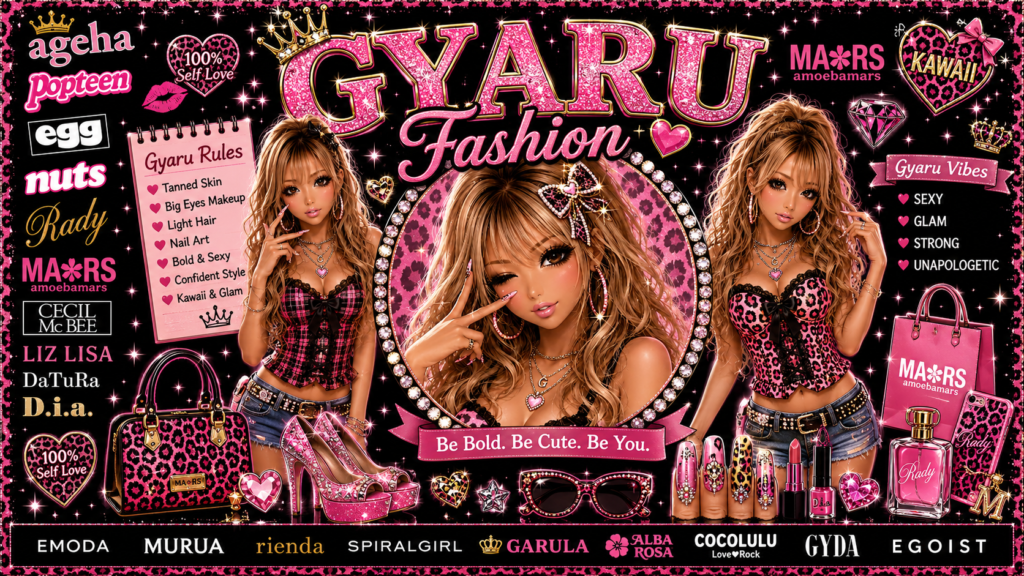
Frequently Asked Questions About Gyaru Fashion
What is Gyaru fashion?
Gyaru fashion is a Japanese street fashion subculture that emerged in the late 20th century. It emphasizes individuality, glamour, self-expression, and a rejection of conventional beauty standards. Common features include dramatic makeup, styled hair, fashionable clothing, and bold accessories. Over time, Gyaru evolved into multiple substyles, each with its own aesthetic and cultural influences.
Is Gyaru fashion still popular today?
Yes. While Gyaru is no longer a dominant mainstream trend in Japan as it was during the early 2000s, it remains active through dedicated communities, social media platforms, fashion events, and online creators. In recent years, TikTok, Instagram, and YouTube have helped introduce Gyaru to a new generation of fashion enthusiasts worldwide.
What is the difference between Gyaru and Ganguro?
Gyaru is the overall fashion movement, while Ganguro is one specific Gyaru substyle. Ganguro is known for its deeply tanned skin, bleached hair, dramatic makeup, and highly exaggerated appearance. Not all Gyaru dress in the Ganguro style, and many substyles have completely different aesthetics.
Can beginners wear Gyaru fashion?
Absolutely. Many people start with modern or casual Gyaru looks before exploring more elaborate substyles. Beginners often focus on learning basic makeup techniques, styling their hair, and gradually building a wardrobe rather than attempting a full transformation immediately.
Do you need to tan your skin to be Gyaru?
No. While some historical substyles such as Ganguro, Manba, and Yamanba incorporated tanning as a defining feature, many Gyaru styles do not. Modern Gyaru communities generally emphasize self-expression rather than following a single appearance standard.
What are the most popular Gyaru substyles?
Some of the most well-known Gyaru substyles include:
- Hime Gyaru
- Agejo
- Kogyaru
- Ganguro
- Manba
- Yamanba
- Onee Gyaru
- Rokku Gyaru
- Tsuyome Gyaru
- Neo Gyaru
Each style has its own approach to clothing, makeup, hairstyles, and overall aesthetic.
What makeup is essential for a Gyaru look?
Although techniques vary between substyles, most Gyaru makeup focuses on enlarging the eyes and creating a glamorous appearance. Key products often include:
- Eyeliner
- False eyelashes
- Mascara
- Concealer
- Highlighter
- Contour products
- Lip gloss
Many Gyaru makeup tutorials also use eye-enlarging techniques such as lower lash emphasis and strategic highlighting.
What brands are associated with Gyaru fashion?
Several brands became iconic within the Gyaru community, including MA*RS, d.i.a., LIZ LISA, and ALBA ROSA. Many vintage pieces from these brands remain highly sought after by collectors and fashion enthusiasts.
Where can I buy Gyaru clothes?
Authentic Gyaru clothing can often be found through Japanese resale platforms, secondhand marketplaces, fashion communities, and specialty retailers. Vintage pieces are especially popular because many classic Gyaru brands are no longer producing their original collections.
Is Gyaru part of Harajuku fashion?
Not exactly. Gyaru and Harajuku fashion are both important Japanese street fashion movements, but they developed separately and have different aesthetics. Harajuku fashion is often associated with creative experimentation across many subcultures, while Gyaru focuses more specifically on glamour, beauty, and self-expression.
What hairstyles are common in Gyaru fashion?
Popular Gyaru hairstyles often feature volume, curls, extensions, and dyed hair colors. Blonde, honey brown, and highlighted styles became particularly associated with the movement. Modern Gyaru hairstyles may incorporate more contemporary trends while maintaining the signature glamorous look.
Can Gyaru fashion be affordable?
Yes. While collecting rare vintage pieces can be expensive, many people build Gyaru-inspired wardrobes using affordable alternatives, thrifted items, and modern fashion brands. Makeup, styling, and confidence often contribute more to the overall look than expensive clothing alone.
Why is Gyaru important in Japanese fashion history?
Gyaru played a major role in challenging traditional beauty standards and expanding ideas about self-expression in Japan. Its influence can still be seen in contemporary fashion, beauty trends, social media aesthetics, and youth culture around the world.
Conclusion: More Than a Fashion Trend
Gyaru fashion has always been about more than clothing, makeup, or hairstyles. At its heart, the movement represents confidence, creativity, and the freedom to define beauty on your own terms.
From the bustling streets of Shibuya in the 1990s to today’s global online communities, Gyaru has continually evolved while staying true to its core spirit of self-expression. Whether it’s the glamorous elegance of Hime Gyaru, the bold rebellion of Ganguro, or the modern interpretations gaining popularity on social media, every branch of the culture reflects a desire to stand out rather than blend in.
For newcomers, the world of Gyaru can seem overwhelming at first. There are countless substyles, makeup techniques, fashion brands, and cultural references to explore. The good news is that there is no single “correct” way to be Gyaru. The most authentic approach is to learn the history, understand the culture, and then adapt the style in a way that feels genuine to you.
As fashion trends continue to come and go, Gyaru remains influential because it offers something timeless: the confidence to express yourself unapologetically. That message resonates just as strongly today as it did during the movement’s peak.
Whether you’re building your first Gyaru-inspired outfit, experimenting with makeup, researching Japanese street fashion, or becoming part of the global community, you’re participating in a fashion culture that has inspired generations of creative individuals.
Ready to Start Your Gyaru Journey?
Explore different substyles, experiment with makeup techniques, study iconic brands, and connect with the growing global Gyaru community. The more you learn about the culture behind the fashion, the more rewarding your journey will become.